Last updated: August 11, 2026
- It can show whether an extra $25, $50, or a larger amount meaningfully shortens the debt.
- – A $50 extra payment can make a bigger difference on high-rate revolving debt than on a low-rate installment loan.
- A $50 bump can change the whole picture.
- Some lenders apply the extra directly to principal; others need instructions.
Quick Answer: An extra payment calculator can show, in one run, how a $50 or $100 monthly extra payment may cut months off a debt and reduce interest, but the result is only as reliable as the loan terms you enter.
Key Facts
– A calculator can estimate payoff date, total interest, and savings versus minimum payments.
– A $50 extra payment can make a bigger difference on high-rate revolving debt than on a low-rate installment loan.
– Timing matters: an extra payment made earlier in the cycle usually saves more interest than one made later.
– Use the exact balance, annual rate, and minimum payment for the closest estimate.
– Re-run the calculator after a rate reset, balance transfer, or income change.
A $50 bump can change the whole picture. Sometimes it looks tiny; sometimes it is doing the heavy lifting. Either way, an extra payment calculator shows how fast extra money can knock down debt — but only when the loan terms you enter match reality.
For readers who want plain-English answers, this extra payment calculator is a practical way to estimate the effect of paying above the minimum. I’ll say this up front: this is information, not financial advice. For your own situation, a qualified adviser can help.
Most people are really asking one thing: “If I send more than the minimum, how much sooner will I be done, and what should I watch before I commit?” Fair question.
Extra Payment Calculator: What It Actually Shows
Use an extra payment calculator when you want a quick forecast of how extra principal payments change the life of a loan or credit card balance. Payoff date, total interest, and savings versus minimum payments are the main outputs.
I like the calculator format because it turns vague motivation into something you can actually measure. Enter the balance, interest rate, minimum payment, and extra amount; then you can see whether a small monthly bump trims a few months or whether a larger one chops the term down meaningfully. The real point is simple. Not fantasy. Just the gap between your current path and a faster one.
A generic article often pretends every debt behaves the same. It does not. A fixed-rate installment loan, a revolving credit card balance, and a mortgage can all accept extra payments, but the effects differ. Some lenders apply the extra directly to principal; others need instructions. Some debts have prepayment rules. Some don’t.
I would treat the calculator as a planning tool, not proof that extra payments are always the smartest move. High rates and no prepayment penalty? The case for extra payments usually gets stronger. Thin emergency fund? The math may be right, but the timing may be off. This trade-off matters more than the shiny output. Flashy numbers can flatter you.
For background on how extra payments and amortization work, I’d also look at consumer guidance from the Consumer Financial Protection Bureau and basic loan-amortization explanations from a regulated lender or financial educator you trust.
Extra Payment Calculator: How It Works in Practice
The calculator works by recalculating the payoff schedule after each extra dollar you send. Core inputs are straightforward: starting balance, annual interest rate, required payment, extra amount, and payment frequency. Usually, the output is a revised payoff date plus total interest.
Timing matters here. Make an extra payment earlier in the cycle, and you usually save more interest than you would by paying late in the month, because less balance sits there accruing interest. This is why many calculators ask whether you want one extra payment now, a recurring extra payment, or both.
Simple and disciplined is the sweet spot. You have steady income, a debt with a clear rate, and you want to know how much faster a monthly extra payment could move you to zero. In that case, the calculator helps you set a target. It can show whether an extra $25, $50, or a larger amount meaningfully shortens the debt. I’d use it to choose a goal, then build that number into a budget.
But the weakness is just as important. A calculator can make the future look tidier than it is. It usually assumes your interest rate stays the same, your lender applies payments the way you expect, and you never miss a month. Should any of those change, the projection changes too. Variable rates, promotional periods ending, late fees, and account changes can all throw the math off.
My view is simple: an extra payment calculator works best when you need a realistic answer, not a perfect one. It is not a crystal ball. It is a planning tool for people who want to see the payoff line move.
The Real Difference Between Minimum Payments and Extra Payments
Minimum payments keep an account current. Extra payments change the shape of the debt. That is the split that matters.
Minimum payments are built to satisfy the lender, not to clear the balance quickly. On revolving debt especially, a minimum payment can spend a long time mostly covering interest. Extra payments attack principal faster, which reduces the amount on which future interest is charged. This is why the payoff timeline changes so dramatically when the balance is large or the rate is high.
The calculator lets you compare two paths side by side. On one side: stay current and pay gradually. On the other: pay above the minimum and finish sooner. The gap between those paths is often where the biggest motivation lives. When people see the difference in months, or in total interest, the extra payment stops feeling symbolic. It is doing real work.
Still, minimum payments are not useless. They matter when cash flow is tight, when you are stabilizing after a job loss, or when the debt has a very low rate and you have better short-term uses for the money. That is the part a simplistic debt article skips. Sometimes the extra payment is the right move mathematically but the wrong move for your actual life.
If you are comparing these two approaches, the calculator wins for clarity, but minimum payments win for flexibility. I would not shame anyone for staying at the minimum while they rebuild savings. I would also not pretend the minimum is a payoff plan. It is a maintenance plan.
Extra Payment Calculator vs Debt Snowball and Debt Avalanche
The calculator is not a debt payoff strategy by itself. Pair it with a strategy — debt snowball, debt avalanche, or a hybrid plan — and it becomes much more useful. It is best when you need to estimate the result before you choose.
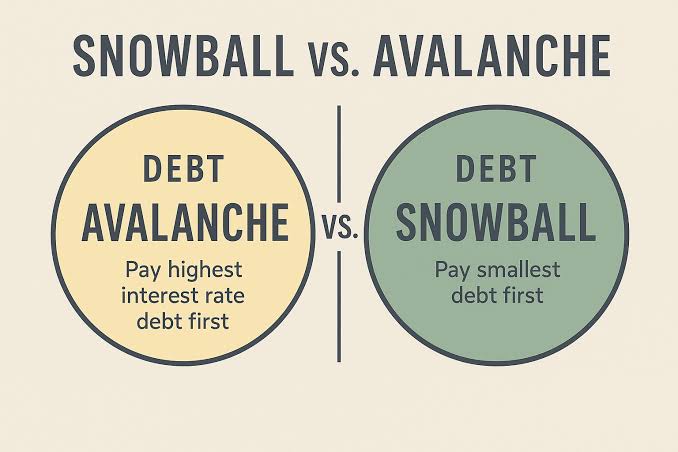
Debt snowball focuses on the smallest balance first. Debt avalanche focuses on the highest interest rate first. The calculator can model either path, but it does not choose for you. This difference matters because people often confuse “how fast can I pay this off?” with “which debt should I attack first?” Related questions. Not the same one.
My take is plain. If your main need is motivation and you have several small balances, the snowball can feel easier to stick with. If your main need is minimizing interest, the avalanche is usually the cleaner math. The calculator shows the cost of each approach. In that sense, it is less a strategy than a decision aid.
Because of that, the useful question is not only what the calculator says today, but whether the plan fits your budget next month too. A calculator can overstate precision when your real life is messy. One month you can send an extra payment; the next month you cannot; suddenly the projected payoff date is a moving target. Still useful. Just not sacred.
The Honest Side-by-Side
The fastest way to choose is usually to compare the tools by what actually changes your decision.
| Criteria | Extra Payment Calculator | Manual Guessing | Winner for this condition |
|---|---|---|---|
| Time to payoff estimate | Calculates a revised payoff date | Usually vague or wrong | Extra Payment Calculator |
| Interest savings estimate | Shows the effect of extra principal | Hard to estimate accurately | Extra Payment Calculator |
| Ease of use | Quick once inputs are known | Simple, but imprecise | Extra Payment Calculator |
| Flexibility with changing budgets | Can be rerun as income changes | Easy to improvise | Manual Guessing |
| Helpful for choosing a payoff method | Useful for snowball vs avalanche comparisons | Not very useful | Extra Payment Calculator |
| Works when debt terms are complicated | Better than mental math, but still limited | Poor | Extra Payment Calculator |
| Best for people who need motivation | Good, because it shows progress | Fair, but fuzzy | Extra Payment Calculator |
| Best for people who hate numbers | Can feel tedious at first | Low friction | Manual Guessing |
| Risk of false certainty | Moderate if assumptions are ignored | High because there’s no structure | Extra Payment Calculator |
The calculator wins most of the time because it gives structure. Manual guessing only wins when your goal is rough triage, not planning. When you are trying to make a real payoff decision, guesswork is too slippery.
Our Verdict: Which One to Choose and Why
Choose an extra payment calculator if you have a debt balance, a known interest rate, and a real possibility of paying more than the minimum each month. Choose manual rough estimating only if you are just trying to decide whether extra payments fit into this month’s budget. Neither if you are on the edge of missing bills, have no emergency cushion, or face prepayment rules you have not checked.
That is the clean answer. The calculator wins for anyone who wants a payoff plan they can revisit and refine. It is the better choice because it turns extra payments into a timeline, not just a hope. It also helps you compare “small but steady” with “larger but less frequent” contributions, which is where many payoff decisions actually happen.
I would not use the calculator as a replacement for a full financial review. If your income is unstable, if you have tax questions, if your debt is tied to a mortgage or business loan, or if you are juggling several priorities, a qualified adviser can help you sort the order of operations. This is especially true when country-specific rules, lender terms, or tax treatment may change the outcome. For mortgage-related rules, the Consumer Financial Protection Bureau has consumer guidance, and for tax treatment you can also check the IRS or a tax professional.
When to Reconsider This Choice Entirely
There are a few cases where the whole extra-payment idea needs a second look, and the calculator should not be your first move.
First, if your emergency savings are thin, I would pause before sending extra money to debt. An emergency fund can keep you from re-borrowing the same money later at a worse cost.
Second, if your debt has a prepayment penalty or a lender rule that limits how extra money is applied, you need to read the loan terms first. A calculator cannot protect you from a contract clause.
Third, if the interest rate is very low by current standards, extra payments may still be fine, but the payoff urgency is lower. In that case, the question becomes how debt repayment fits alongside other goals, not whether you can speed up the finish line at all costs.
Fourth, if you have high-interest revolving debt and several balances, the better answer may be to map a full repayment order before sending extra money anywhere. The calculator can help, but only after the order is clear. The CFPB debt-repayment guidance is a useful starting point.
How to Get a Useful Result from the Calculator
To get a result you can trust, don’t plug in random numbers and call it final. Use the exact current balance, the actual annual rate, the required minimum payment, and the extra amount you can sustain even in a tight month. If the calculator offers payment frequency options, choose the one that matches how you really pay. For a savings check, the CFPB explains why payment timing and loan terms matter.
I also recommend rerunning it after any major change: rate resets, balance transfers, income shifts, or a new monthly surplus. This is where the tool becomes genuinely useful. It is not a one-time trophy screenshot. It is a planning check you can repeat.
The biggest mistake is using the calculator to justify an amount you cannot maintain. A payoff plan that breaks after two months is worse than a slower plan you can live with. The calculator can show speed, but discipline decides whether the speed holds.
FAQ
What does an extra payment calculator actually save me?
It shows the likely reduction in payoff time and total interest when you pay more than the minimum. The exact result depends on your balance, rate, lender rules, and how often you make extra payments.
Is it better to make one large extra payment or smaller recurring ones?
That depends on your cash flow. Recurring extra payments are easier to maintain for many people. A larger lump sum may reduce interest more if it reaches principal earlier.
Does paying extra always help?
Usually yes, if the debt allows principal prepayment without penalties. But if you need cash for emergencies or the loan has special rules, paying extra may not be the right first move.
Should I use the snowball or avalanche method with the calculator?
Use the calculator to compare both. If you want the lower-interest path, model avalanche. If you want the psychological win of clearing smaller balances first, model snowball.
Can I trust the payoff date the calculator gives me?
Only as an estimate. Real-world changes in rate, payment timing, fees, and your budget can move the date.