Last updated: August 11, 2026
- Quick answer: For which debt payoff strategy is better you?
- That is the real choice in which debt payoff strategy is better you?
- Snowball vs avalanche: which one wins each round?
- Which debt causes the most stress?
FTC disclosure: If you use any links in this article to open accounts or learn more about services, I may earn a commission at no extra cost to you.
Quick answer: For which debt payoff strategy is better you? snowball vs avalanche, the usual winner is avalanche for lower interest costs and snowball for staying motivated. In a simple three-debt example, snowball can feel faster, while avalanche usually saves more interest. I’m writing this as a personal finance writer, not a financial adviser, so please treat this as general information and consult a qualified financial adviser or nonprofit credit counselor about your own situation. See the CFPB and FTC sources below.
Verdict: Need momentum because you keep stalling? Debt snowball is usually the better fit; for the math-first path, debt avalanche usually costs less in interest over time.
I’ve spent years covering debt payoff, credit, and budgeting, and one question keeps coming up: should you pay off your smallest balances first, or your highest-interest balances first? That is the real choice in which debt payoff strategy is better you? snowball vs avalanche.
Quick verdict box
Winner for motivation: Debt snowball, because quick wins can make a long payoff plan feel real.
Winner for minimizing interest: Debt avalanche, because it attacks the most expensive debt first.
Best overall for many readers: Avalanche if you can stick with it; snowball if you know you need visible wins to stay in the game.
Key facts / takeaways:
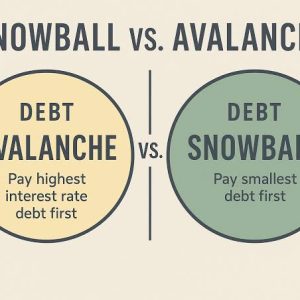
– Snowball targets the smallest balance first.
– Avalanche targets the highest interest rate first.
– Snowball may feel faster in the first 1–3 payoffs.
– Avalanche usually reduces interest paid over time.
– When you have quit payoff plans before, motivation matters as much as math.
Quick comparison: snowball vs avalanche
| Decision factor | Debt snowball | Debt avalanche |
|---|---|---|
| Payoff order | Smallest balance first | Highest interest rate first |
| Main strength | Momentum and motivation | Lower interest cost over time |
| Main weakness | Can cost more in interest | Progress can feel slow at first |
| Best for | People who need behavioral wins | People who like a math-based plan |
| Risk of quitting | Lower for some people, because wins show up sooner | Higher for some people, because the first payoff may take longer |
| Works best when | You need a simple, visible system | You can stay disciplined without emotional rewards |
Which debt payoff strategy should you choose?
Will you actually stick with the plan long enough for it to work?
That question matters more than most people expect.
There is no universal winner here.
When someone has tried budgeting before, then quit the moment progress felt invisible, I’d lean toward snowball. It gives you a debt account you can erase sooner, and that closed balance can feel like proof the system is working. Nice and tangible.
For people who already follow a budget, do not need much emotional reinforcement, and want the cleanest financial logic, avalanche is usually the stronger choice. It does not try to be inspiring; it tries to be efficient. Plain and simple.
This is where generic articles often miss the point: they treat debt payoff like a spreadsheet contest. Real life is messier. Debt payoff is partly math and partly behavior, and the “best” method is the one you can keep doing after the first few months, when the shine wears off; experts at the Consumer Financial Protection Bureau and Federal Trade Commission both stress practical, sustainable debt management habits.
How debt snowball works
With debt snowball, you keep making minimum payments on every debt, then put every extra dollar toward the smallest balance first. Once that balance is gone, you roll that payment into the next smallest debt.
The appeal is obvious: quick wins.
A small balance can disappear fast, even when it is not your most expensive debt. That matters more than people admit. One zeroed-out account can make the whole plan feel possible. For someone who has been buried under several balances, that psychological lift can be the difference between staying organized and throwing in the towel.
The downside of snowball
The trade-off is simple: snowball does not prioritize interest cost. If your smallest debt also has a low rate, you might leave a high-rate balance sitting there longer than necessary.
So snowball can feel better while being more expensive overall. Brutal, but true.
How debt avalanche works
With debt avalanche, you keep making minimum payments on all debts, then attack the debt with the highest interest rate first. After that debt is gone, you move to the next highest rate.
The appeal here is straightforward: you aim at the costliest debt first, which usually saves money in interest over time.
This method is clean and rational. It is the one I would choose if I were helping a reader who says, “I do not need encouragement; I need the most efficient plan.”
The downside of avalanche
Because avalanche puts the most expensive balance first, it can be emotionally hard at the beginning. When your highest-interest debt is also a large balance, it may take a long time before you get the first payoff victory. Some people can handle that. Some cannot.
Here is the snag: a plan can look perfect on paper and still fail if the person using it loses steam.
Snowball vs avalanche: which one wins each round?
1) Motivation: snowball wins
Need a payoff plan that feels visible? Snowball usually wins this round.
I’d choose it for someone who says:
– “I get discouraged when progress is slow.”
– “I need to see one account disappear.”
– “I have started and stopped debt plans before.”
Why? The feedback loop is quicker. You do not spend months staring at the same big balance. Smaller debts get crossed off, confidence builds, and the whole thing feels less like pushing a boulder uphill.
2) Interest savings: avalanche wins
If your goal is to reduce interest cost, avalanche wins this round.
That is not a guess; it comes from the order of operations. High-interest balances grow faster, so paying them first usually reduces the amount of interest that piles up while you are still working through the rest of your debt.
The catch is that “usually” matters. Exact savings depend on your balances, rates, minimum payments, fees, and how consistently you can add extra payments. Lenders set rates differently, and those rates can change over time, so no article can promise the same result for every borrower.
3) Simplicity: tie, with a small edge to snowball
Both methods are simple once you commit.
Snowball can be easier to explain to yourself: smallest balance first, then the next smallest. Avalanche is just as structured, but the logic can feel less intuitive if you are not used to thinking in interest rates.
Honestly, a lot of people find snowball easier to follow because the “next target” is obvious and satisfying. Avalanche is still simple, but it asks you to trust the math before you feel the payoff.
4) Staying on track: snowball usually wins for behavior
This is the part many finance explainers skip. A debt payoff method is not only about the numbers. It has to fit your habits.
When your money stress comes from feeling stuck, snowball can reduce that feeling sooner. If your money stress comes from disorganization, either method can work, but snowball’s early wins may help you stay engaged.
On the other hand, if you are disciplined and do not need a morale boost, avalanche may be the better long-run system because it matches your willingness to wait for a financial payoff.
5) Best fit for big balances and high rates: avalanche wins
If one of your debts carries a much higher rate than the others, avalanche becomes more compelling.
That is especially true when the balance is large and the rate is punishing. Paying that debt first can stop expensive interest from piling up in the background while you handle smaller accounts.
But I’d still look at your behavior honestly. When the avalanche plan feels so discouraging that you are likely to abandon it, the theoretical savings may never matter.
Who should use debt snowball?
I would point debt snowball at a very specific kind of reader:
- You feel overwhelmed by multiple balances.
- You have tried to pay off debt before and lost momentum.
- You need short-term wins to stay consistent.
- You are more likely to stick with a plan that feels rewarding.
- You want a simple system you can explain without a lot of math.
Snowball is often a good fit if the emotional burden of debt is as heavy as the financial burden.
Who should skip snowball?
Skip snowball if your main goal is to lower total interest cost and you know you can stay disciplined without visible early wins. When you are comfortable waiting and want efficiency, snowball may be the wrong trade-off for you.
Who should use debt avalanche?
I would point debt avalanche at a different reader:
- You like a rule-based plan.
- You can stay motivated without frequent wins.
- You want to focus on the most expensive debt first.
- You already track your finances carefully.
- You are comfortable waiting longer for the first account to disappear.
Avalanche is often the better fit for people who think in terms of long-term cost and can tolerate slower emotional feedback.
Who should skip debt avalanche?
Skip avalanche if slow progress would make you quit. If a big balance will stare back at you for months and sap your energy, the method may be mathematically tidy but psychologically expensive.
A practical example without the fake math
Suppose you have three debts:
– a small balance with a low rate,
– a medium balance with a moderate rate,
– a large balance with a high rate.
Snowball tells you to clear the small balance first, even when it is cheap to carry. Avalanche tells you to attack the high-rate balance first, even if it is the largest and most stubborn one.
When you are the kind of person who gains energy from checking something off a list, snowball may keep you moving.
If you are the kind of person who wants to reduce the drag on your budget as efficiently as possible, avalanche is the cleaner fit.
I’m skipping hard numbers here on purpose, because the right order depends on your actual balances, your minimum payments, and the rates on each account. Those details are personal, and they matter.
A weakness of each method that people should not ignore
Snowball’s weakness
Snowball can be emotionally effective and financially less efficient. That is the trade-off. You may feel better sooner while paying more interest than necessary.
Avalanche’s weakness
Avalanche can be financially efficient and emotionally tougher at the start. That can matter enough to derail the plan.
A lot of advice articles pretend one of those weaknesses does not matter. I think that is lazy. The better method is the one that fits the person using it, not the one that looks smartest in isolation.
What I would look at before choosing
Before you decide, I would check five things:
-
How many debts do you have?
More accounts often make early wins more valuable. -
How strong is your budget?
When you already know where your money goes, avalanche can be easier to sustain. -
Which debt causes the most stress?
Sometimes the “worst” debt is not the highest rate; it is the one that keeps you awake. -
Have you quit payoff plans before?
If yes, motivation matters more than perfect efficiency. -
Can you keep paying minimums on everything?
Both methods assume you do not miss required payments.
If you are dealing with severe financial strain, a counselor, nonprofit credit counselor, or qualified adviser may help you think through options beyond either method. You can also review the CFPB’s debt guidance and the FTC’s consumer advice before deciding.
Sources worth checking
For plain-English guidance on managing debt and understanding interest, I’d start with:
– the Consumer Financial Protection Bureau’s debt collection and debt management resources: https://www.consumerfinance.gov/consumer-tools/debt-collection/
– the Federal Trade Commission’s consumer advice on debt and credit: https://consumer.ftc.gov/
If you are outside the U.S., your national consumer protection agency or financial regulator may have equivalent guidance, and local rules can differ.
FAQ
Is debt snowball or avalanche better?
Avalanche is usually better if you care most about minimizing interest. Snowball is often better if you need motivation to stay consistent.
Does snowball always cost more?
Not always. In many cases it costs more in interest because it does not prioritize the highest-interest debt first, but the gap depends on balances, rates, fees, and payment habits.
Can I combine the two methods?
Yes. Some people start with snowball to build momentum, then switch to avalanche once they feel more in control. That can work, but the best order depends on your actual debts and habits.
Which method helps with credit scores?
Neither method is designed to “boost” a credit score directly. What matters more is paying on time, keeping accounts current, and reducing balances responsibly. Credit effects vary by country and credit system.
What if I can only make minimum payments?
Then either method will be slower, and you may need to look at a broader budget, hardship options, or professional help. A qualified adviser or nonprofit credit counselor can help you review choices for your situation.
Final verdict
If you want my plain answer: choose debt avalanche if you can stay committed; choose debt snowball if you need early wins to avoid quitting. The one condition that flips the decision is not the math — it is your follow-through. If a slower-starting plan will make you give up, the “better” strategy on paper is not better for your life.