Last updated: August 11, 2026
- Flexibility matters because a budget can change in a single month, but a debt plan often lasts 12, 24, or 36 months.
- If your highest APR is 28% and your lowest is 12%, the cost difference can add up quickly over a year.
- In practice, the debt snowball often gets the nod.
- Then the debt avalanche usually fits better—provided you can keep going.
Quick Answer: For a typical debtor, a debt payoff calculator can show whether snowball or avalanche will save more time or interest, and the result often changes with balances and APRs. Want the shortest route you’ll actually follow? In practice, the debt snowball often gets the nod. Chasing the lowest interest bill? Then the debt avalanche usually fits better—provided you can keep going. A debt payoff calculator is the tool that shows how either plan changes your timeline, monthly cash flow, and total interest in your own numbers.
Key Facts
– Debt payoff calculator: Enter balances, APRs, minimum payments, and extra monthly cash to model payoff time and total interest.
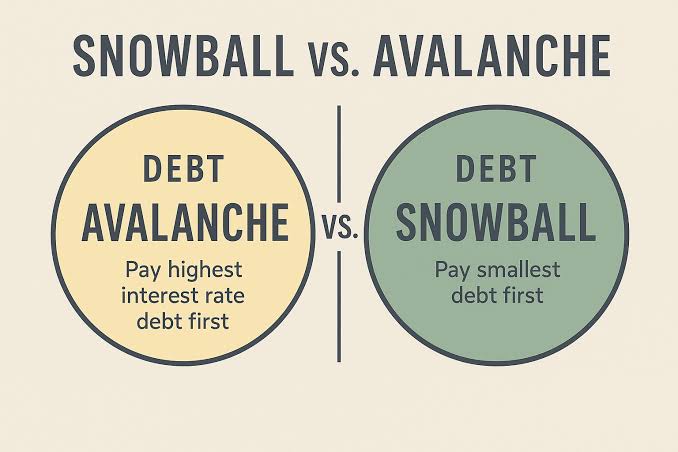
– Debt snowball: Pay minimums on everything, then attack the smallest balance first.
– Debt avalanche: Pay minimums on everything, then attack the highest APR first.
– Behavior vs math: Snowball is usually easier to sustain; avalanche is usually cheaper on interest.
– Use case: A calculator is most useful before you commit, because it can compare both methods with your exact numbers.
– Sources: Consumer Financial Protection Bureau and National Foundation for Credit Counseling both offer free debt and credit guidance.
FTC disclosure: Any financial tools or services I mention below may have affiliate links or commercial relationships elsewhere on the site.
Verdict box: Pick debt avalanche if you care most about saving interest and can stay motivated by math; pick debt snowball if you need quick wins to keep paying. Use a debt payoff calculator to see which one fits your actual balances, rates, and budget.
I write about personal finance for readers who are trying to get out of debt without making a mess of their budget. This is information, not financial advice; for your own situation, especially if you have mixed debt types, late fees, or hardship issues, a qualified financial adviser or nonprofit credit counselor can help.
Quick spec table
| Feature that changes the decision | Debt payoff calculator | Debt snowball | Debt avalanche |
|---|---|---|---|
| Main purpose | Model payoff timelines and interest | Build momentum with small wins | Minimize interest cost |
| Best use case | Comparing methods before committing | Need motivation and visible progress | Comfortable with delayed gratification |
| Ordering rule | You set balances, rates, and payments | Smallest balance first | Highest interest rate first |
| Emotional fit | Neutral; depends on inputs | Strong for beginners who need encouragement | Strong for organized, numbers-driven payers |
| Math efficiency | Shows the trade-off | Often costs more interest than avalanche | Often costs less interest than snowball |
| Risk | Bad inputs give bad output | Can feel slow if small balance has a low rate | Can feel discouraging if top debt is large |
| What it cannot do | It does not repay debt for you | It does not optimize for interest savings | It does not optimize for motivation |
What each one actually is
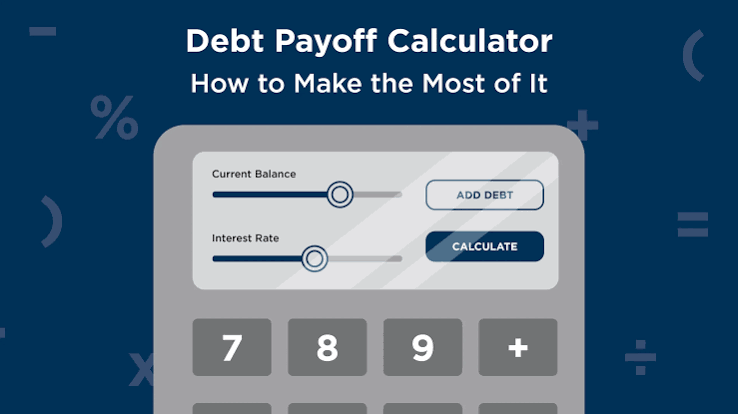
A debt payoff calculator is not a repayment strategy by itself. It is a planning tool, plain and simple. You plug in balances, APRs or interest rates, minimum payments, and any extra money you can throw at debt; then it shows what happens if you pay in a certain order or add a certain extra amount each month. A good calculator helps you compare the snowball and avalanche without guessing.
The debt snowball is a repayment method where you pay minimums on all debts, then put every extra dollar toward the smallest balance first. Once that debt is gone, you roll that payment into the next smallest. The point is not pure math; it is momentum. A tiny balance vanishes, and suddenly the whole thing feels possible.
The debt avalanche uses the same basic idea—minimums on everything, extra money on one target—but the target is the highest interest rate first. Once that debt is gone, you move to the next highest rate. This method is often the most interest-efficient because expensive debt stops growing sooner.
A generic article would stop there and call it a day. That misses the real question: which one works for a person who already knows they are in debt but needs a plan that won’t fall apart in month two?
Debt payoff calculator vs debt snowball vs debt avalanche: which wins on the decision factors?
1) Clarity and planning: the calculator wins
The calculator turns the decision into numbers you can inspect. It lays out each balance, the payoff order, and the way extra payments move the finish line. I think of it as the map; the snowball and avalanche are the routes.
Debt advice gets fuzzy fast. Two people can both have “credit card debt,” but one may have a single high-rate card and one may have five cards with tiny balances. The same repayment method can feel great in one case and miserable in another.
For a simple example, a $5,000 balance at 24% APR accrues about $1,200 in interest over 12 months if unpaid, while a $5,000 balance at 12% APR accrues about $600 over the same period. That is why the numbers matter before you choose a plan. A calculator lets you test your own situation before you commit.
Why the calculator wins this round: it lets you test your own situation before you commit.
Weakness: if your inputs are incomplete or optimistic, the output is only a polished guess.
2) Interest cost: the avalanche wins
On pure math, avalanche is the cleaner method because it attacks the costliest balance first. That usually reduces how long interest keeps piling up at the highest rate. “Usually” earns its keep here. Different fees, promotional rates, and changing terms can shift the math, and rates vary by country and lender.
If your only goal is to pay the least interest possible and you can stay consistent, avalanche is the method I’d expect to come out ahead more often than not.
Why avalanche wins this round: it attacks expensive debt first, which is the part of debt that keeps biting you month after month.
Weakness: the biggest balance may also be the most emotionally draining. If you need frequent wins, this method can feel slow.
3) Motivation and behavior: the snowball wins
I give the snowball the edge for human behavior. Not because it is mathematically superior—it usually is not—but because debt payoff is often a behavior problem wrapped in a math problem. The smallest balance is often the easiest to erase, and that first cleared account can make the whole process feel real.
That can matter more than a spreadsheet. Honestly, I have seen the same pattern in personal finance writing for years: people do better with a plan they actually follow than with the “best” plan they abandon.
For many borrowers, eliminating a $300 card feels easier than waiting months to reduce a $9,000 card, even if the smaller card is not the most expensive debt. Quick closures create a visible sense of progress.
Why snowball wins this round: quick closures create a visible sense of progress.
Weakness: you may pay more interest than you would under avalanche, especially if the smallest balance also has a low rate.
4) Flexibility when cash flow changes: the calculator wins again
Life changes. A car repair, reduced hours, a medical bill, a move—any of these can change how much extra you can send to debt. A calculator helps you rerun the plan with a new monthly number instead of starting from scratch.
Snowball and avalanche are rules. The calculator sits above them as the planning layer. That makes it more flexible when you need to see what happens if you can only pay a little extra for a while.
Flexibility matters because a budget can change in a single month, but a debt plan often lasts 12, 24, or 36 months. A calculator can update those projections quickly.
Why the calculator wins this round: it adapts to changes in your budget without forcing you to guess.
Weakness: some calculators are too simplistic and ignore fees, irregular payments, or different compounding rules.
5) Emotional fit: snowball wins for beginners, avalanche wins for planners
This one is about personality, not virtue.
If you feel stuck, ashamed, or exhausted by debt, snowball often works better because it gives you smaller goals with faster payoff moments. If you like structure and can wait for the payoff at the end, avalanche may fit better because the logic is clean and the goal is cost reduction.
A calculator does not solve motivation on its own. It shows the road, but it does not make the driving easier. Rough edges remain.
Why snowball wins here for many readers: it creates momentum you can feel.
Weakness: if you only chase quick wins, you can lose sight of the larger interest cost.
How I would use a debt payoff calculator before choosing
I would start with the calculator, not because it is glamorous, but because it forces honesty.
Enter:
– every debt balance,
– each interest rate if you know it,
– the minimum payment,
– and the extra amount you can pay each month.
Then compare at least two scenarios:
1. smallest balance first, and
2. highest rate first.
The point is not to crown a “universal best.” The point is to see the trade-off in your own life. If avalanche saves some interest but leaves you too frustrated to continue, the math advantage may not matter. If snowball keeps you engaged, that behavioral win can be worth more than a theoretical interest savings you never realize.
This is where many generic articles get lazy. They present snowball versus avalanche as if the decision is moral. It is not. It is practical. A repayment method is good if it fits your budget, your temperament, and your consistency.
The Consumer Financial Protection Bureau has debt collection and credit education material here:
– https://www.consumerfinance.gov/consumer-tools/debt-collection/
– https://www.consumerfinance.gov/consumer-tools/credit-reports-and-scores/
For nonprofit guidance on debt repayment and credit counseling, the National Foundation for Credit Counseling is another reputable starting point:
– https://www.nfcc.org/
For a broader federal consumer-finance overview, the Federal Trade Commission also publishes plain-language money guidance:
– https://consumer.ftc.gov/
Who should get the debt snowball
I would point snowball toward someone who:
– has several debts and feels overwhelmed,
– needs visible progress to stay motivated,
– has tried “optimal” systems before and quit,
– or tends to ignore long plans unless they produce early wins.
Snowball is also a decent fit if your debts are similar in interest rate and the emotional difference between methods is small. In that case, the simplicity may matter more than the interest arithmetic.
If you are choosing between debt snowball and debt avalanche, that same rule of thumb applies: when the balances are close and the rates are close, behavior may matter more than math.
Snowball is not for you if: you are highly motivated by cost efficiency and you know you’ll resent paying extra interest for a psychological boost.
Who should get the debt avalanche
I would point avalanche toward someone who:
– likes spreadsheets and clear rules,
– can stay disciplined even when the first win takes time,
– wants the lowest-interest path they can reasonably follow,
– or has one or two very high-rate balances that are clearly the most expensive problem.
Avalanche is also a strong fit if your debt stack is large enough that interest really compounds the damage. If you can keep paying long enough, this method is often the cleaner financial choice.
If your highest APR is 28% and your lowest is 12%, the cost difference can add up quickly over a year. That is why a debt payoff calculator is useful before you commit.
Avalanche is not for you if: the plan feels too abstract and you know that losing momentum is your bigger risk than paying a bit more interest.
The honest weakness of each method
I do not think a useful article should hide the downsides.
Debt payoff calculator weakness: it can create false confidence. A nice-looking output does not fix a shaky budget or a repayment plan that assumes perfect behavior.
Debt snowball weakness: it may cost more in interest than necessary. If you have expensive balances, that can become a real drag.
Debt avalanche weakness: it can be emotionally hard to stick with because the first visible win may take longer.
That is the real decision. Not “which one is smartest?” Better question: which one will I actually keep doing for months, or even years, without dropping off?
Real-world way to choose
If I were choosing between these three tools for myself, I would use this order:
- Run a debt payoff calculator with my actual numbers.
- Compare snowball and avalanche side by side.
- Pick the one I’m most likely to follow through on.
That order matters because the calculator is the one that makes the trade-off visible. Snowball and avalanche are strategies. The calculator helps me decide which strategy fits the person I actually am, not the person I wish I were.
A lot of people ask for the “best” method. I think that question is too vague. Better question: Do I need motivation, or do I need efficiency? If you need motivation, snowball has the edge. If you need efficiency, avalanche does.
FAQ
Is a debt payoff calculator better than snowball or avalanche?
No. It is different. The calculator helps you compare repayment plans. Snowball and avalanche are the plans.
Does snowball always cost more than avalanche?
It can cost more, but not always in a dramatic way. The gap depends on your balances, interest rates, and how consistently you pay extra.
Can I switch from snowball to avalanche later?
Yes. People often start with snowball for momentum and switch later when they want to focus on interest cost. A qualified adviser can help you decide whether that makes sense for your situation.
What if I have one very high-rate card and a few small balances?
That is exactly the kind of situation where a calculator is useful. It can show whether the psychological lift of knocking out a small balance outweighs the interest cost of leaving the high-rate card untouched for longer.
Is there a universally best method?
No. The best method is the one that fits your behavior, your budget, and your debt terms. Those differ by person and can change over time.
Final verdict
My pick is the debt avalanche if you can stay consistent, but the debt snowball wins for many real people because follow-through matters more than perfect math. The debt payoff calculator is the smartest first step because it shows you the trade-off in your own numbers.
The condition that flips my recommendation is motivation: if the avalanche plan makes you stall out, choose snowball instead. A repayment method that keeps you moving is better than a “better” method you abandon.
For your own situation, especially if the debt is large, rates are confusing, or minimum payments are becoming unmanageable, talk with a qualified financial adviser or nonprofit credit counselor before you commit to a plan.