Last updated: August 11, 2026
- A $10,000 balance with no APR is not enough to estimate payoff time.
- A $5,000 balance at 20% APR can still drag on even with a $150 monthly payment; years, not months, is the honest expectation.
- Calculators convert it into a periodic rate, often monthly, by dividing the APR by 12 in a simplified model.
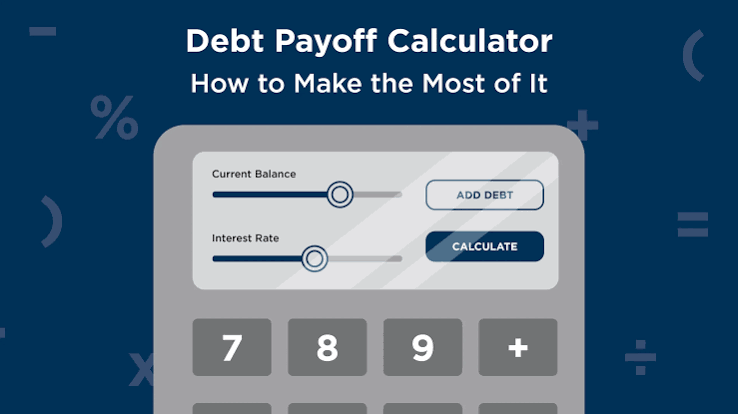
- A debt payoff calculator is only as good as the formulas behind it.
Quick Answer: A debt payoff calculator usually starts with three numbers—balance, APR, and monthly payment—and for many credit cards and loans, that is enough to estimate payoff time in months. A $5,000 balance at 20% APR can still drag on even with a $150 monthly payment; years, not months, is the honest expectation. So the estimate leans hard on the rate and the payment.
Key Facts
– Balance is the current amount owed.
– APR is the yearly cost of borrowing, often converted to a monthly rate.
– Payment is the monthly amount you can actually sustain.
– Time is the output, usually measured in months.
– A payoff estimate is only as good as the assumptions behind it.
– For your own situation, a qualified financial adviser or licensed credit counselor can help verify the numbers.
A debt payoff calculator is only as good as the formulas behind it. Understand how balance, APR, payment, and time fit together, and you can spot the difference between a realistic payoff estimate, an optimistic one, and one that quietly ignores a fee, grace period, or minimum-payment rule. Nice on paper. Wrong in practice.
I write on personal finance as a subject matter writer, and I’ll be direct: this is information, not financial advice. Debt rules, interest rates, and consumer protections vary by country and change over time, so for your own situation, a qualified financial adviser or licensed credit counselor is worth consulting.
The Real Difference Between Balance, APR, Payment, and Time
Simple version: balance tells you what you owe, APR tells you the cost of carrying it, payment tells the calculator how hard you are attacking it, and time is the result. Mix those up, and the payoff math starts looking precise while standing on the wrong assumptions.
Here’s the structure I use when I think through a debt payoff calculation:
- Balance is the starting amount on the debt.
- APR is the yearly interest rate, usually converted into a monthly rate for calculations.
- Payment is the amount you send each month.
- Time is how long it takes to reduce the balance to zero at that payment level.
Each month, interest gets charged on what remains, and then your payment lands. Part goes to interest; the rest cuts principal. Two people can send the same amount and still finish at very different times if their APRs are different. Same payment. Wildly different finish line.
A lot of generic explanations get one thing wrong: they treat debt payoff as if payment minus balance is the whole story. It is not. Interest takes its cut first. With a higher APR, more of each payment disappears into interest, so the balance drops more slowly.
There is also an important distinction between simple payoff math and amortized debt. For a rough estimate, a calculator may assume a fixed monthly rate and a fixed payment. That works well enough for many credit cards and loans. It works less well when rates change, minimum payments change, fees are added, or you pause payments.
For the underlying logic in plain English, the formula is basically:
New balance = old balance + interest charge − payment
That one line is the engine behind most payoff calculators.
For a deeper formula reference, I trust the Consumer Financial Protection Bureau’s explanations of amortization and APR concepts, and I would also point readers to the Federal Trade Commission’s consumer debt guidance. Those are good places to check how lenders are supposed to present rate information and repayment terms. See the CFPB’s consumer finance resources and the FTC’s debt guidance pages.
Balance: What the Calculator Is Really Starting From
Balance is the starting point because it is the only number that tells the calculator where the debt stands today. Get that number wrong, and everything else in the estimate misses too, even when APR and payment are exact.
In practice, a calculator usually wants the current principal balance or the statement balance, depending on the debt type. That distinction matters. A credit card statement balance may differ from the payoff amount because interest can keep accruing until the actual payoff date, and the issuer may add a few days of daily interest. A loan payoff quote can also differ from the displayed balance because of accrued interest and payoff processing timing.
The strength of balance in the formula is that it anchors the whole estimate. If you owe less than you thought, the payoff time shortens immediately. If you owe more, the horizon stretches. Obvious? Sure. But that is where plenty of users slip — they type in a rounded number from memory instead of the current figure from the statement or online account.
The weakness is that balance alone can create a false sense of certainty. A $10,000 balance with no APR is not enough to estimate payoff time. A calculator needs the rate and the payment too. Without them, balance is just a snapshot, not a forecast.
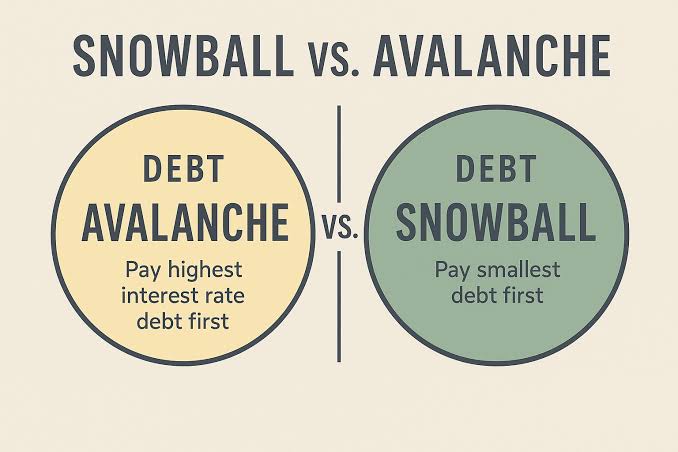
This is the right starting point for someone who has several debts and wants to rank them. I would use balance first to identify the size of the problem, then apply APR to find the expensive balances, then payment to see how fast each one falls.
Who should use balance-first thinking? Anyone with multiple debts, anyone comparing payoff strategies, and anyone checking whether a quoted payoff amount seems high. Who should not stop here? Anyone trying to decide how long a debt will take to clear. Balance without rate and payment is only half the answer.
APR: Why the Interest Rate Changes the Whole Timeline
APR is the number that changes the whole timeline, because it determines how much of each payment gets eaten before the balance can shrink. A debt with a low APR and a debt with a high APR can have the same balance and the same payment, yet finish months or years apart.
APR is usually the annual cost of borrowing expressed as a percentage. Calculators convert it into a periodic rate, often monthly, by dividing the APR by 12 in a simplified model. Some debts use daily interest, which is why exact payoff quotes can differ from rough calculator results. That is not a flaw in the calculator so much as a difference between an estimate and a lender’s live accounting.
The strength of APR is that it explains why a payment feels ineffective on some debts. When the rate is high, a larger share of the payment goes to interest first. That slows principal reduction. This is especially visible with revolving credit, where minimum payments can keep balances alive for a long time even if you never add new charges.
The weakness is that APR can tempt people to overfocus on the rate and ignore the payment. A very high APR with a large payment can still disappear quickly. A lower APR with a tiny payment can drag on. APR matters, but it is only one part of the equation.
When you are using a debt payoff calculator, APR is the number I would double-check twice. People often confuse APR with the interest rate on the statement, or they forget that promotional rates expire. If a promotional period ends and the rate jumps, the payoff timeline changes too.
This is also where a lot of generic advice gets sloppy. It says “just pay more” without showing how much more matters. With the formula in mind, you can see the exact mechanism: a higher payment reduces the balance faster, which reduces future interest, which shortens time. The APR is what makes that acceleration either modest or dramatic.
Payment: The Lever That Changes Time the Fastest
Payment is the most practical lever in the formula, and it usually has the biggest immediate effect on time. If balance is the starting line and APR is the friction, payment is the force pushing the debt down the hill.
A payoff calculator needs the monthly payment because time is not determined by balance alone. It is determined by how much principal your payment can knock out after interest is charged. Once the monthly interest charge is known, the remaining part of the payment reduces the balance. The larger the payment relative to interest, the faster the debt falls.
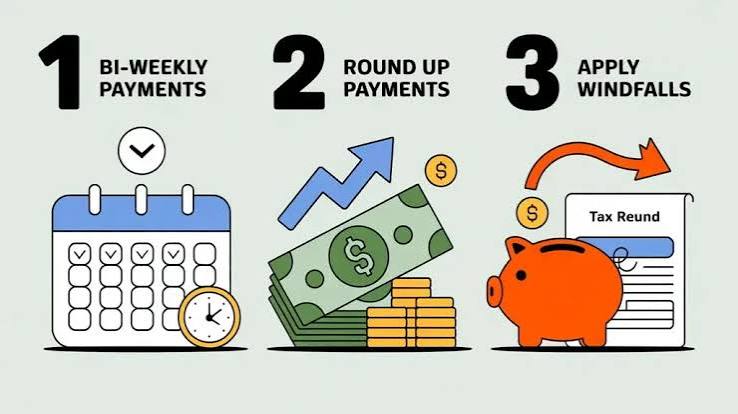
The strength of payment is that it is actionable. You can usually change it faster than you can change APR. Extra payments, even small ones, often shave meaningful time off the payoff schedule because they attack principal directly. That is why calculators often show a big difference between minimum payments and fixed extra payments.
The weakness is that payment can be misleading if it is set too low. If your payment barely covers interest, the calculator may show very slow progress or, in some cases, no meaningful progress at all. On some debts, fees or interest can outpace a small payment, which means the balance falls painfully slowly.
I would treat payment as the test of whether a debt payoff plan is real or theoretical. If the number only works because you assume you can make a huge payment every month, the plan may be fragile. If the payment is realistic but modest, the timeline may be long, and that is better to know now than halfway through.
A useful calculator should let you compare at least two payment levels: your minimum and your target payment. That gives you a range. The range is more honest than a single date because real life changes. Car repairs happen. Income changes. Medical bills show up. A clean formula cannot predict those events, but it can show how much room you have.
The Honest Side-by-Side
Below is the comparison that actually matters when you are using a debt payoff calculator: which input gives you the most useful decision, and what each one fails to tell you on its own.
| Criteria | Balance | APR | Payment | Winner for [condition] |
|---|---|---|---|---|
| Shows current debt size | Yes | No | No | Balance for checking what you owe now |
| Explains interest cost | No | Yes | Only indirectly | APR for understanding why the balance moves slowly |
| Determines monthly cash commitment | No | No | Yes | Payment for planning what you can actually afford |
| Predicts payoff time | Only with other inputs | Only with other inputs | Only with other inputs | All three together for a realistic timeline |
| Helps compare debts | Yes, for size | Yes, for cost | Yes, for burden | APR for cost; balance for size |
| Most likely to be misread | Rounded or outdated balance | Promotional or changing rate | Minimum payment confusion | None—each needs verification |
| Most useful for stress reduction | Yes, if it is smaller than expected | Sometimes, if the rate is low | Yes, if it feels sustainable | Payment for day-to-day affordability |
| Most useful for strategy | Early sorting only | Very strong | Very strong | APR plus payment for payoff planning |
My read on the table is pretty plain: balance shows where you stand, APR shows what the debt costs, and payment shows how fast you can get out from under it. Only one number? Start with balance. Want the real payoff date? You need all three.
Debt Payoff Calculator Formulas Explained: How Time Is Calculated
Time is the output, not the input. That is the part many readers want most, and it is also the part that becomes least trustworthy if the first three variables are shaky. A payoff calculator estimates time by repeatedly applying interest to the remaining balance and then subtracting your payment until the balance reaches zero.
The idea can be written in a simple recurrence:
- Start with the current balance.
- Convert APR into the periodic rate.
- Calculate the interest charge for the period.
- Subtract the payment.
- Repeat until the balance is gone.
That repetition is why the answer is usually expressed in months. A calculator is not just dividing balance by payment. It is simulating month after month of interest and principal reduction.
When the payment is fixed, time gets shorter when balance falls faster and longer when APR rises. If the rate is fixed, time gets shorter when payment rises. If payment is only a little higher than interest, time can still be long. That is not a calculator problem; it is the math of amortization.
A generic article often skips the hard part: fees, compounding frequency, and changing rates. Those can change the timeline. A simple calculator may not model every lender rule perfectly, especially for variable-rate debt or debts with irregular charges. That is why I would treat the result as an estimate, not a promise.
The most useful way to read the time result is as a planning tool. If a calculator says the debt lasts longer than you can tolerate, the problem is not the calculator. The problem is that the payment is too small for the balance and APR combination. If the date looks manageable, the formula gives you a target to work toward.
Our Verdict: Which One to Choose and Why
Choose balance-first thinking if you are trying to organize multiple debts and you do not yet trust your numbers. Choose APR-first thinking if you want to find the most expensive debt. Choose payment-first thinking if you need a realistic monthly plan you can actually stick to. Choose all three together if you want the payoff time.
I would not treat this as a contest with one permanent winner, because the formula needs all three inputs to be useful. When I had to rank them by decision value for most readers, I would put payment first for practicality, APR second for cost, and balance third for context. That ranking changes if you are sorting debts, where APR often becomes the smartest first filter.
The cleanest recommendation is this: begin with the current balance, confirm the APR, then test a payment you can sustain. That sequence gives you the most honest payoff estimate. It also keeps you from fooling yourself with a timeline built on an unrealistic monthly amount.
When to Reconsider This Choice Entirely
So, there are a few cases where the overall payoff approach should be reconsidered entirely. When your debt has a variable APR, a promotional rate that expires, or a minimum payment that changes with the balance, the calculator’s answer is only a snapshot. In those cases, check the lender’s terms, compare the current statement, and, if needed, ask a licensed credit counselor or financial professional to review the numbers with you.