Last updated: August 11, 2026
- – A $20,000 loan at 7% APR for 60 months carries about $3,760 in scheduled interest.
- Add $50 a month, and the payoff can land roughly 9 months earlier, while interest drops by about $350, depending on how the lender applies payments.
- Quick Answer: An auto loan payoff calculator can show your payoff date and interest cost in seconds.
- Want to know when your auto loan ends and how much interest is still sitting in the balance?
Quick Answer: An auto loan payoff calculator can show your payoff date and interest cost in seconds. On a $20,000 auto loan at 7% APR with a 60-month term, the scheduled interest is about $3,760 — a tidy reminder that “small” numbers add up. Add $50 a month, and the payoff can land roughly 9 months earlier, while interest drops by about $350, depending on how the lender applies payments. Want to know when your auto loan ends and how much interest is still sitting in the balance? The auto loan payoff calculator: find your payoff date interest cost gives the fastest answer. This is information, not financial advice, and a qualified adviser should be consulted for your own situation.
Key facts
– An auto loan payoff calculator shows two numbers: payoff date and total interest cost.
– Extra principal payments can shorten a loan, but only if the lender applies them correctly.
– A $20,000 loan at 7% APR for 60 months carries about $3,760 in scheduled interest.
– A payoff quote from the lender is more precise than a calculator estimate.
– Check your contract for prepayment penalties and principal-only payment instructions.
The search usually boils down to one plain question: “If I make extra payments or pay off my car early, what date do I actually hit zero, and what interest do I save?” An auto loan payoff calculator: find your payoff date interest cost can answer that — provided you enter the right figures and read the output with a little care.
How an Auto Loan Payoff Calculator Actually Works
Use the calculator when you want a clean payoff date, not a hand-wavy guess. It takes your remaining balance, interest rate, payment amount, and payment frequency, then projects how fast the balance falls and how much interest accrues along the way.
Simple on paper. Messier in practice. Auto loans usually amortize, which means early payments mostly cover interest and later payments attack principal. Extra principal payments can pull the payoff date forward faster than people expect; stick with the scheduled amount, and the calculator should show a steady end date based on your current terms.
A useful calculator also lets you model one-time extra payments and recurring extra payments. Those are not the same thing. A lump sum can trim some interest, but a regular extra amount often shifts the payoff picture more dramatically because it keeps pushing principal down every month.
What a generic article often misses is the lender’s own rules. Some auto lenders apply extra money to future payments unless you specify “principal only.” Some loans have prepayment provisions, while others still let you pay early without a penalty. So the calculator’s output is only as good as your loan terms. In cases where your agreement is murky, check the contract or call the lender before you rely on the result.
For background on how amortization and loan costs work, I’d point readers to the Consumer Financial Protection Bureau’s explanations on loans and repayment, and to the Federal Trade Commission’s guidance on auto loans and early payoff practices. Those agencies regularly publish consumer-facing explanations that are worth a look:
– Consumer Financial Protection Bureau: https://www.consumerfinance.gov/consumer-tools/auto-loans/
– Federal Trade Commission: https://consumer.ftc.gov/
The Real Difference Between a Payoff Date and Total Interest Cost
Payoff date and total interest cost answer different questions, and the calculator is most useful when you care about both. The date tells you when the loan ends. The interest total tells you what the borrowing really costs you over time.
I’d treat the payoff date as the headline number and the interest cost as the warning light. The date matters if you are trying to plan a refinance, free up monthly cash flow, or line up a future car purchase. The interest total matters if you are comparing “keep paying normally” versus “pay extra” versus “make a lump-sum payoff.” For a decision that affects your budget or debt plan, consult a qualified financial professional and verify the loan terms with your lender.
The payoff date is easier to read. The interest total is where the choice gets real. A shorter loan may still cost more than you expect if your extra payments are small. A longer loan may look expensive on paper, but if the rate is low and your cash is tight, the monthly burden may matter more than the lifetime interest. That trade-off is exactly why a calculator is useful: it turns a vague “Should I pay it off early?” into a concrete before-and-after comparison. No mystery, just arithmetic.
The limitation is that calculators assume your loan behaves the way the schedule says it will. Real life can interrupt that. If your lender recalculates around a due-date change, if your payment arrives late, or if your loan has odd fee rules, the projected payoff date can drift. For that reason, I’d use the calculator as a planning tool, not as a final legal statement of what you owe.
The Honest Side-by-Side
The cleanest way to use an auto loan payoff calculator is to compare your current schedule against an accelerated payoff plan. That is where the tool earns its keep.
| Criteria | Current Schedule | Accelerated Payoff Plan | Winner for this condition |
|---|---|---|---|
| Monthly cash flow | Lower monthly strain | Higher monthly strain | Current schedule if cash is tight |
| Payoff date | Later | Earlier | Accelerated payoff if ending debt sooner matters |
| Total interest cost | Usually higher over time | Usually lower if extra payments hit principal | Accelerated payoff if the lender credits extras correctly |
| Budget predictability | More predictable | Less flexible if income changes | Current schedule for uneven income |
| Speed to free up title/ownership | Slower | Faster | Accelerated payoff for title-minded borrowers |
| Risk of payment-processing mistakes | Lower, because payments are standard | Higher if extra principal is not specified clearly | Current schedule if lender instructions are unclear |
| Usefulness for planning a refinance | Good baseline | Better for testing different payoff dates | Accelerated payoff |
| Value for emergency planning | Less helpful for cash liberation | Can show how soon monthly money returns to you | Accelerated payoff |
| Need to read loan documents closely | Moderate | High | Current schedule |
The table makes one point plain: the calculator is not about “saving money” in the abstract. It is about choosing which constraint matters most right now. If monthly breathing room matters more than ending the loan early, the normal schedule wins. If you can handle the higher outflow and you want to reduce interest, the accelerated path wins.
Because lenders can treat extra payments differently, a generic calculator article often forgets to mention that the winner changes if the servicer handles extra money badly. If extra money is not credited to principal, the whole exercise can disappoint. That is not a calculator problem; it is a servicing problem. Before changing your payment pattern, read the loan terms carefully and confirm how the lender handles extra funds.
Current Schedule: Who Should Actually Use This
Borrowers who need certainty and low monthly pressure more than speed are the best fit for the current schedule. If your income varies, if you are rebuilding savings, or if you are carrying other high-priority debt, the standard payment plan is usually the cleaner baseline to model first.
I’d use this option when the goal is not to finish faster, but to understand the loan as written. It shows the true payment burden the lender expects, and it gives you a clean reference point for comparison. That matters because people often make emotional decisions about car debt without knowing the full interest cost of changing course.
Simplicity is the strength here. A standard schedule is easier to track, easier to budget for, and less likely to go wrong with payment allocation. If you are the kind of borrower who wants one fixed number every month and no surprises, the calculator helps you confirm when the loan naturally ends.
But the weakness is obvious: you may pay more interest over the life of the loan than you would with extra principal payments. The consequence is not abstract. Every month that principal stays high, interest keeps accumulating on a larger balance. That is the trade-off for predictability.
Who should skip this option? Borrowers with extra cash sitting idle and no near-term emergency cushion may find the standard schedule too slow. If your only reason for staying on schedule is habit, the calculator may show that the habit is costing you more than you expected. That math stops working fast.
Accelerated Payoff Plan: The Specific Situations Where It Wins
The accelerated plan wins when your real goal is to cut interest and end the loan sooner, and you have the cash flow to do it without squeezing yourself too hard. That is the cleanest use case for an auto loan payoff calculator: find your payoff date interest cost.
Choose this option if you have stable income, you already have a decent emergency fund, and your lender credits extra payments directly to principal. The calculator can show how even modest recurring extras change the payoff date. That is where it becomes useful: it converts a vague extra-payment idea into a concrete end date.
Its real strength is visibility. Instead of wondering whether an extra payment “matters,” you can see the date move. That helps with motivation, but it also helps with planning. You may decide that a small recurring extra amount is enough, or you may discover that a larger one-time payment changes the math more than expected.
The downside is cash flow pressure. Faster payoff is not free; it consumes money you could otherwise keep for repairs, job gaps, or other obligations. If an aggressive payoff plan leaves you one repair bill away from new debt, the calculator’s prettier payoff date may hide a worse overall position.
This option is also weaker if your lender handles payments poorly. If the servicer does not apply extra funds correctly, your projected payoff date may be fiction. That is why I’d only trust the accelerated plan after confirming the lender’s payment instructions in writing or through a clear account portal.
The Honest Side-by-Side on Extra Payments, Prepayment, and Lender Rules
This is where the calculator often helps people avoid a costly assumption: not every extra payment works the same way. A generic article might tell you to “pay extra” and leave it there. That is incomplete.
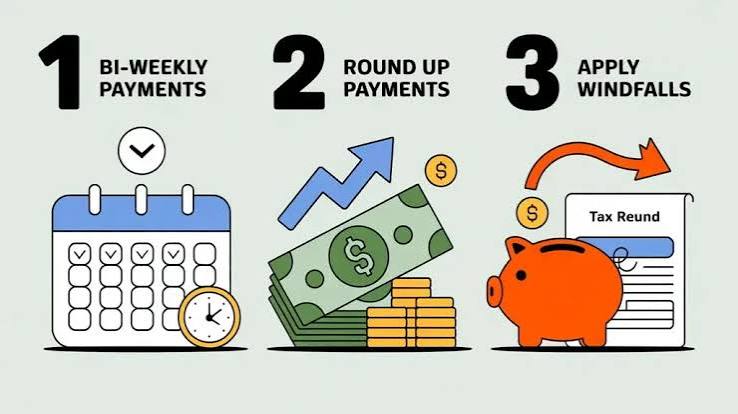
A one-time extra payment can be useful if you get a bonus, tax refund, or insurance reimbursement and want to reduce principal. A recurring extra payment is better if you want a predictable payoff date and a steady drop in interest cost. The calculator should let you test both. If it does not, use a separate scenario sheet or do the math by hand.
Prepayment rules matter too. Some auto loans allow early payoff without penalty. Others may include fees or require specific notice. Those rules differ by country, lender, and contract. I would not assume your loan behaves like your friend’s loan or like the calculator’s default example.
That is also why a payoff calculator is more powerful than a simple “remaining balance” lookup. It gives you a forecast, not just a snapshot. But the forecast is only useful if you know what the lender will do with every dollar you send.
If you want to understand the consumer side of loan servicing and repayment, the CFPB’s auto loan resources are a good starting point, and your loan contract remains the real controlling document.
Our Verdict: Which One to Choose and Why
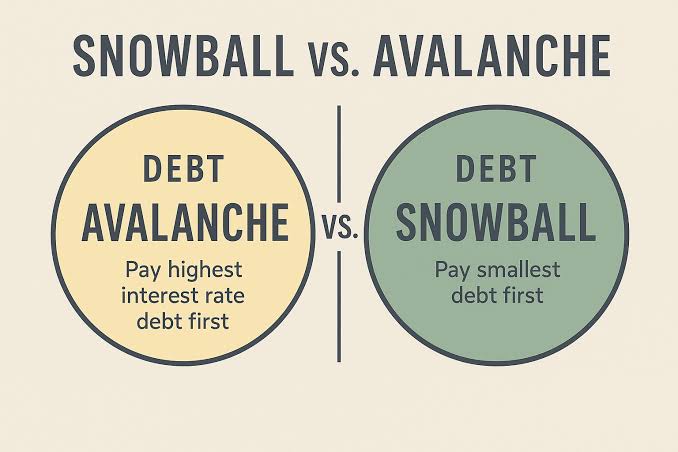
Choose the accelerated payoff plan if you have a stable emergency cushion, your lender credits extra principal correctly, and you want the clearest path to a lower total interest cost. Choose the current schedule if your cash flow is tight, your income is uneven, or you need the safest monthly budget. Neither is right if you do not yet know the loan’s prepayment rules or you cannot confirm how extra payments are applied.
That is my call. The calculator is best used to compare those two paths side by side, then pick the one that fits your real budget rather than your ideal budget.
When to Reconsider This Choice Entirely
There are a few situations where the choice flips or the whole question changes.
-
You have high-interest debt elsewhere.
If other obligations are costing you much more than your car loan, an auto loan payoff calculator still works, but it may not answer your best next move. Your priority may be cash flow or debt order rather than car payoff speed. -
Your emergency savings are thin.
A faster payoff looks attractive until a repair bill or job loss forces new borrowing. In that situation, I would be cautious about committing extra money to the loan. -
Your lender charges a prepayment penalty or complicates extra principal.
In that case, the projected savings may shrink or disappear. The calculator can still show the math, but the contract decides the outcome. -
You are considering refinancing instead of prepaying.
A payoff calculator can help you estimate the remaining life of the loan, but it does not replace a refinance comparison. Different rates, fees, and terms can change the answer.
The point is not to force the calculator to do more than it can. It is a planning tool, not a promise.
A Simple Way to Use the Calculator Without Fooling Yourself
Start with four facts: your current balance, interest rate, monthly payment, and the exact way your lender applies extra payments. Then run two scenarios: normal payment only, and payment plus extra principal. If the second scenario gives you a payoff date you can live with and still leaves room in your budget, you have something concrete to work from.
I’d also check the payoff quote directly with the lender before sending a final lump sum. A quoted payoff amount is usually better than a calculator estimate because it reflects the current day’s interest and any fees that apply. If your goal is to close the loan, that quote is the number that matters.
FAQ
How accurate is an auto loan payoff calculator?
It is only as accurate as the inputs and the lender’s payment rules. If the calculator uses the right balance, rate, and payment schedule, it can get close, but the lender’s quote is the final number to trust.