Last updated: August 11, 2026
- Take one card at 28% APR and another loan at 9%.
- But a penalty, deferred interest, or a risky payment reset on the 9% loan can flip the answer.
- Situation: You have a 0% promotional balance with a deadline.
- The avalanche approach usually says: pay minimums on both, then pour every extra dollar at the 28% card until it is gone.
A debt avalanche calculator helps you decide which debt to attack first when interest costs are draining your budget. Credit-card balances, personal loans, maybe a car loan or a medical bill — all of them can crowd the same paycheck. So the question inside a debt avalanche calculator: how prioritize high-interest debts is blunt: which balance should get every extra dollar so you pay the least interest over time? The avalanche method answers by lining debts up from highest interest rate to lowest, while minimum payments keep the others from slipping.
Quick Answer: A debt avalanche calculator usually puts the highest APR debt first; for many borrowers, that can trim total interest versus paying extra on lower-rate balances, but you should compare your own numbers and review them with a qualified financial adviser or nonprofit credit counselor before acting. Source: CFPB debt collection and debt management resources; FTC credit and debt guidance.
Key Facts
– Avalanche means minimum payments on all debts, then extra payments to the highest APR balance first.
– The highest-rate debt usually costs the most in interest per dollar of balance.
– Promotional rates, deferred interest, penalty APRs, and missed payments can change the best payoff order.
– A calculator is only as accurate as the balances, APRs, minimums, and deadlines you enter.
– Compare avalanche with snowball if motivation, not math, is your biggest challenge.
This is information, not financial advice. Your situation may call for a different order, so a qualified financial adviser or credit counselor should review your own numbers before you act.
What the Debt Avalanche Calculator Is Really Doing
Already know your balances, minimum payments, and APRs? Then the calculator is not doing magic. It is ranking debts by cost. The balance with the highest interest rate usually drains the most money per dollar owed, so that one gets the extra payment first.
Take one card at 28% APR and another loan at 9%. The avalanche approach usually says: pay minimums on both, then pour every extra dollar at the 28% card until it is gone. But a penalty, deferred interest, or a risky payment reset on the 9% loan can flip the answer. Funny how fast the neat logic gets messy.
A decent calculator should let you enter:
- creditor name
- current balance
- minimum payment
- interest rate
- any promotional rate end date
- extra monthly amount you can commit
It should then show:
- payoff order
- estimated interest saved compared with minimum payments only
- time to become debt-free under that plan
That last point matters. A generic article often says “avalanche saves money” and stops there. The useful version asks a sharper question: saves money compared with what, and under what assumptions? When your income swings around, your emergency fund is empty, or your debts hide penalties in the fine print, the answer may be less helpful than it looks.
For a plain-language reference on budgeting and debt management, I would start with the Consumer Financial Protection Bureau’s debt collection and debt management material, and with the Federal Trade Commission’s credit and debt pages:
– CFPB: https://www.consumerfinance.gov/consumer-tools/debt-collection/
– FTC: https://consumer.ftc.gov/credit-loans-and-debt
Quick check: Want the cheapest payoff order rather than the fastest emotional win? Avalanche is probably the method you mean.
If Your Main Goal Is Paying the Least Interest, Use This Order
Minimizing interest cost makes the order pretty straightforward: highest APR first, minimums everywhere else. But the mathematically strongest plan can still fail in practice if you need motivation to stay on track. That is the trade-off. The calculator matters because it turns “high interest first” into a concrete monthly sequence you can actually follow.
Here is the workflow I would use:
- List every debt separately. Do not combine balances that have different rates or terms.
- Write down the balance, minimum payment, APR, and whether the rate is fixed, variable, or promotional.
- Confirm the due date and whether the lender charges late fees or penalty rates after a missed payment.
- Sort the debts from highest APR to lowest APR.
- Pay the minimum on every debt to keep accounts current.
- Send every extra dollar to the top-ranked debt until it is paid off.
- When that debt disappears, roll its payment into the next one on the list.
The calculator helps most when you test two options side by side, and when you are unsure how a payoff order affects your overall finances, consult a qualified financial adviser or nonprofit credit counselor:
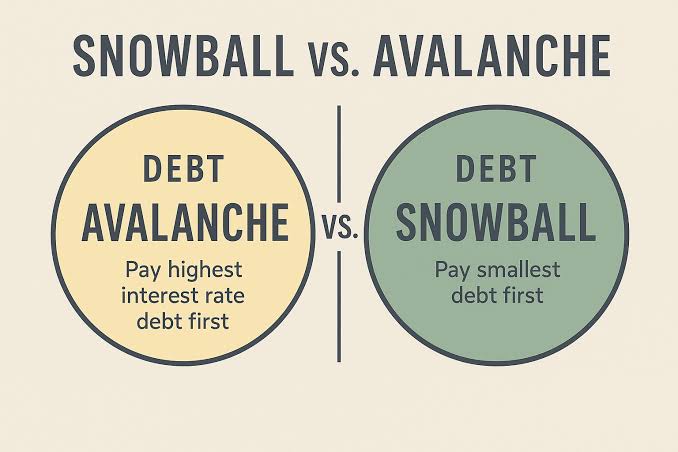
- Avalanche: highest APR first
- Snowball: smallest balance first
A lot of generic content treats those as a personality choice. I would frame it differently: avalanche is the interest-minimizing route, while snowball can be easier to stick with for some people. When staying on the plan is your weak spot, the “best” method on paper may not be the best method in practice. One plan saves pennies; the other saves your sanity. Sometimes that matters more.
Here is a simple decision table:
| Situation | Best Path | Why Other Options Fail |
|---|---|---|
| Highest APR debt is stable and has no weird promo terms | Avalanche | Paying a lower-rate debt first usually costs more interest |
| You need momentum to avoid quitting | Snowball may be easier to follow | A perfect interest-saving plan fails if you abandon it |
| One debt has a promo rate ending soon | Prioritize that one if the post-promo rate spikes | Pure APR ranking can miss an imminent cost jump |
| You missed a payment or are close to it | Protect the current account status first | Interest savings do not matter if fees or penalties snowball |
Quick check: You can make steady extra payments and care most about total interest? Avalanche is the default path to test first.
When the Standard Avalanche Order Is Wrong
Plain APRs with no traps? The standard order usually holds. But the advice falls apart when the contract, payment structure, or your cash flow changes the math.
One common exception is a promotional APR. When a card is at 0% for a limited time and then jumps later, the “current rate” alone may mislead you. Another exception is deferred interest, where not paying the full promotional balance by the deadline can trigger retroactive interest. That can make a low or zero rate much more dangerous than it looks. Sneaky stuff.
A third exception is a debt with a variable rate that can move soon. Because the rate is tied to an index, the current APR may not stay current for long. A fourth is any debt with a late-fee spiral or penalty APR. When one missed payment would make things much worse, keeping that account current may come before pure avalanche ranking.
If you are in one of those cases, use this sequence:
- Identify every debt with a promo end date, deferred interest clause, penalty rate, or variable rate.
- Read the account terms that matter: rate-change rules, fee triggers, and payment allocation rules.
- Mark any debt where a missed deadline would cause a sharp cost jump.
- Re-rank those debts ahead of plain high-APR debts if the contract risk is larger than the rate gap.
- Keep minimum payments on all other accounts unless cash flow is too tight to do that safely.
- When your budget cannot support all minimums, stop prioritizing and start triaging: avoid delinquency first.
Do not let a calculator flatten different kinds of debt into one generic APR number. That is a common failure in rough spreadsheet tools. The better question is not “What has the biggest rate right now?” It is “Which debt gets expensive fastest if I ignore it?”
Quick check: One balance has a promo, deferred interest, variable rate, or penalty risk? Your payoff order may need to change.
How to Build the Right Calculator Input Without Fooling Yourself
When your numbers are sloppy, the calculator will be too. That is where many people go wrong. They enter a rounded balance, forget a minimum payment increase, or ignore fees and then wonder why the payoff date looks off.
I would build the input like this:
- Gather the latest statement for each debt.
- Record the balance exactly as shown, not from memory.
- Capture the APR or interest rate and note whether it can change.
- Record the minimum payment from the statement, because many lenders recalculate it as balances fall.
- Note any annual fee, maintenance fee, late fee, or deferred-interest deadline that changes the real cost.
- Decide how much extra cash you can realistically send each month after essentials.
- Run the calculator again anytime income, expenses, or rates change.
The most useful benchmark is not “How fast can I pay this off if everything goes perfectly?” It is What happens if I can only send a small, steady extra amount? A good calculator should show the effect of $25, $50, or $100 more per month if those are realistic numbers for you. When a tool only works with idealized input, it can create false confidence.
Also, watch the payment allocation rules. Some lenders apply extra payments in a way that does not match your intent unless you tell them how to apply it. For example, an extra payment might be applied to the next due installment instead of principal if you do not specify otherwise. Read the servicer’s instructions carefully and, if needed, confirm with customer service in writing.
That does not mean the debt avalanche method is flawed. It means the calculator is only as good as the assumptions behind it.
Quick check: You have not pulled up the latest statement for each debt? Then you are not ready to trust any payoff calculator yet.
If You’re Torn Between Avalanche and Snowball, Use This Test
Choosing between the debt avalanche calculator and the debt snowball method? I would not ask which one is “better” in the abstract. I would ask which one you are likely to finish.
Avalanche fits best if:
- you are disciplined with monthly payments
- you care about total interest more than quick visible wins
- your debt list is stable and straightforward
- the highest-rate debt is not emotionally overwhelming
Snowball is worth considering if:
- you need small wins to stay engaged
- you have several tiny balances that are cluttering your budget
- you have failed to stick with prior repayment plans
- you are overwhelmed by the number of accounts, not just the rates
The calculator helps here because it turns a feeling into a comparison. Enter the same debts into both methods and compare:
- total interest
- payoff timeline
- number of debts paid off in the first few months
When avalanche saves more but snowball helps you stay consistent, that is not a failure of math. It is a reminder that behavior matters. A plan that fits your real habits can beat a theoretically optimal one you never follow through on. Harsh, but true.
I would not pretend this choice is universal. When you are in severe distress, behind on minimums, or unsure which bill to pay first, a nonprofit credit counselor or qualified adviser may help you sort the order before you commit to any strategy.
Quick check: You already know you quit plans when progress feels invisible? Compare avalanche with snowball before deciding.
Edge Cases That Change the Answer
Messy situation? That does not make the calculator useless. It means the normal rule needs adjustment.
-
Situation: You are behind on a payment.
What changes: Fees, late marks, and penalty rates can matter more than interest ranking.
A better move: Bring the delinquent account current first if you can, then resume avalanche ordering. -
Situation: You have a 0% promotional balance with a deadline.
What changes: The end date matters as much as the current rate.
Instead, do this: Treat the promotional deadline like a cost trigger and include it in your priority list. -
Situation: Your income changes month to month.
What changes: Fixed calculator assumptions may be too optimistic.
Try this instead: Build the plan around your lowest reliable monthly extra payment, not your best month. -
Situation: One debt has a tiny balance but a huge payment trap.
What changes: A small balance can still create outsized damage if fees or penalties hit.
Choose this path: Rank by contract risk, not just by balance size. -
Situation: You are considering debt consolidation or refinancing.
What changes: The payoff order can change if one new loan replaces several old ones.
Do this instead: Recalculate after reading the new terms; do not assume the old order still applies. -
Situation: Your minimum payments already consume almost all free cash.
What changes: The question is no longer optimization; it is survival.
Use this approach: Focus on avoiding delinquency and get outside help early.
These are the cases where generic “highest APR first” advice breaks down. The calculator still helps, but only if you feed it the real constraints.
Quick check: Any debt has a deadline, penalty, delinquency risk, or unstable payment? You are in edge-case territory.
A Simple Way to Use the Calculator Every Month
When you want the method to work, you need a repeatable routine. I would use the calculator once a month, on the same day you review your budget.
- Update balances from the latest statements.
- Check whether any APRs or promo terms changed.
- Confirm the amount of extra cash available this month.
- Re-sort debts by priority using avalanche logic.
- Make the minimum payments first.
- Send the extra payment to the top-priority debt.
- Record what changed so you can see progress over time.
A calculator is not a one-time decision tool. It is a tracking tool. When your balances, rates, or budget shift, the right order can shift too. That is normal.
The real payoff of this approach is clarity. You stop guessing. You know why one debt gets the next extra payment, and you can explain the reason in one sentence: it costs me the most to leave it unpaid.
Quick check: You need a plan you can revisit without starting over each time? Monthly recalculation is the right habit.
FAQ
Does the debt avalanche calculator always save the most money?
Usually, yes, when you compare it with making extra payments in a different order and the debts have similar terms. But promo rates, deferred interest, penalties, missed payments, and other contract terms can change the outcome.
What if I can only make one extra payment sometimes?
Put that extra amount toward the highest-APR debt, unless a promo deadline, penalty risk, or delinquency issue makes a different debt more urgent.