Last updated: August 11, 2026
- Got the balances, minimum payments, and a list of debts?
- Key Facts – The debt snowball calculator: how calculate your payoff order starts with every balance listed separately.
- – Minimum payments keep all accounts current while extra money goes to one target debt.
- Here’s the order I would use for the calculator input: List every debt separately.
Quick Answer: A debt snowball calculator usually ranks debts from smallest balance to largest balance, and the first extra dollar goes to the smallest balance. Got the balances, minimum payments, and a list of debts? Then you can build a payoff order in minutes. But when collections, secured debt, tax debt, or legal protections are part of the picture, consult a qualified professional before trusting the result.
Key Facts
– The debt snowball calculator: how calculate your payoff order starts with every balance listed separately.
– The standard snowball order is smallest balance first, but that is a method, not a universal rule.
– Minimum payments keep all accounts current while extra money goes to one target debt.
– A payoff order can change when a debt is in collections, secured, deferred-interest, or tied to tax or legal obligations.
– If balances, payments, or due dates are missing, the calculator can give a misleading result.
A debt snowball calculator: how calculate your payoff order tells you which debt to attack first when you want the fastest sense of progress: list every balance, rank them from smallest to largest, and keep making minimum payments on everything except the smallest one, which gets every spare dollar. I’m writing this as financial information, not personal financial advice; your own situation can change the right order, so a qualified adviser is worth speaking to if your debts, income, or legal protections are unusual. Straightforward. Not simplistic.
If You Want the Payoff Order, Start With the Right Inputs
Got one burning question — “Which debt goes first?” — then the calculator only works if you feed it the right numbers. Wrong balances, wrong order. Leave out a payment date, a deferred interest rule, or a fee, and the snowball can look tidier than reality.
Here’s the order I would use for the calculator input:
- List every debt separately. Credit cards, personal loans, student loans, medical bills, auto loans, payday loans, and any private debts should each get their own line.
- Write down the current balance. Use the amount you would need to pay off today, not the original loan amount.
- Record the minimum payment. If a debt has no fixed minimum, note the required payment rule or the amount due on the next statement.
- Check the interest rate and fee structure. The snowball method uses balance size for the order, but interest still affects the total cost and the speed of payoff.
- Mark any special conditions. Deferred interest, promotional rates, collections, tax debts, secured loans, or legally protected debts can change the order or the risk of ignoring one; if you are unsure, seek guidance from a qualified professional and use an authoritative source such as the Consumer Financial Protection Bureau or the Federal Trade Commission.
- Separate household debt from business debt. Mixing them can distort the picture and create bad decisions.
The basic formula is simple: sort the balances from smallest to largest, then keep every minimum payment going, and send extra money to the smallest balance until it is gone. After that, roll that freed-up cash into the next debt. The “snowball” is the growing payment you create as each balance disappears.
A generic article often skips the messy part: the calculator does not decide whether a debt should be included. You do. If a debt has penalties for missing payments, a lien, or some other legal consequence, that may make it more urgent than a tiny balance with no near-term fallout. Tiny balance, big headache.
| Situation | Best Path | Why Other Options Fail |
|---|---|---|
| Several credit cards and one personal loan | Rank by smallest balance first | Rate-based ordering may save interest, but it can delay the psychological win that keeps some people going |
| One small debt with a very high rate | Snowball still ranks it first if it is the smallest balance | The interest cost may be higher, but changing the order turns it into a different method |
| Debts with the same balance | Use the one with the highest interest rate, then the one with the lowest minimum payment, or any consistent tie-breaker | If you do not break ties, the order becomes arbitrary and hard to stick with |
| Secured debt or debt tied to an asset | Treat the legal risk separately before using the calculator, and get professional guidance if needed | Balance size alone can hide repossession or foreclosure risk |
Quick check: if you cannot list every debt, its balance, and its required payment, you are not ready to trust the payoff order yet.
How the Debt Snowball Calculation Works in Real Life
For ordinary consumer debts with no special legal deadline, the calculation stays pretty simple. You are not trying to minimize interest first; you are trying to build momentum by clearing the smallest balance, then using that payment amount to crush the next one.
A simple way to think about it:
- Put all debts in a list.
- Sort them from smallest balance to largest balance.
- Make minimum payments on every debt.
- Put all extra money toward the smallest balance.
- When that debt is paid off, add its payment to the next debt.
- Repeat until everything is gone.
If you want to use a calculator well, you need to understand what it is doing behind the scenes. It is not changing your monthly budget. It is only changing the order of attack. That matters because a snowball calculator can make two people with the same debt load see very different payoff paths depending on which balance disappears first.
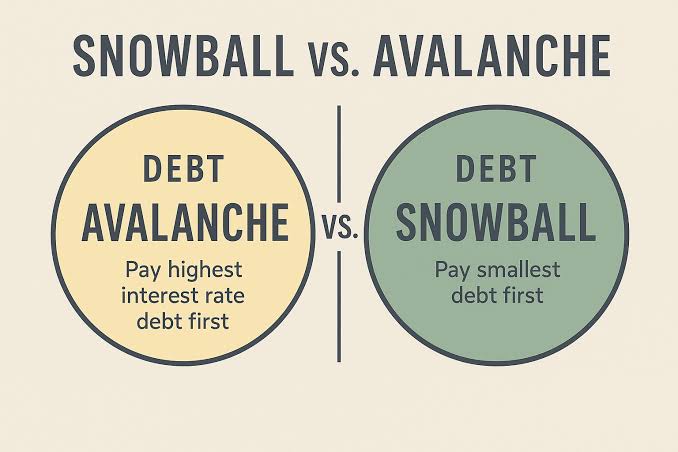
The trade-off is real. Snowballing can cost more in interest than a payoff method that targets the highest rate first. If your top priority is mathematically minimizing interest and you are disciplined enough to stick with that plan, the debt avalanche method may fit better. If your top priority is staying motivated, the snowball structure is often easier to follow. I would not pretend there is no downside: the snowball is a behavior tool, not a magic trick.
A decent calculator should let you see three things at once: the order, the month each debt disappears, and how much extra cash becomes available after each payoff. If it only shows a list of balances with no schedule, it is not very useful. For comparison, the CFPB and FTC both publish consumer debt guidance that can help you sanity-check the numbers.
The Step-by-Step Payoff Order I’d Use
Already have the balances and minimum payments? Then the payoff order is what matters most. Not yet? Gather the statements first. A calculator is only as good as the data you enter.
- Pick your monthly extra payment. This is the money above minimums that you can realistically keep sending every month.
- Sort debts from smallest balance to largest. Ignore the interest rate for now unless two balances are tied.
- Keep every minimum payment on autopay if possible. That reduces the chance of a missed payment while you focus the extra cash.
- Send the full extra amount to the smallest balance. Do not split it across multiple debts unless a legal or contractual issue forces you to.
- When the smallest debt is gone, roll its full payment into the next debt. The new payment should be minimum payment plus the freed-up amount.
- Update the list after each payoff. A new fee, a changed minimum payment, or a balance that moved because of interest can affect the next step.
- Watch for debts that should not be treated like ordinary consumer debt. Tax debt, secured debt, and debts in collections may need separate handling before you continue the snowball; if any of those apply, seek guidance from a qualified professional and check an official source before proceeding.
Want a basic manual calculator? Spreadsheet tools like Excel or Google Sheets work fine. So do reputable consumer finance calculators from nonprofit or government-backed education sites. The tool matters less than the logic. The right order is usually the smallest balance first under the snowball method.
One thing a generic guide often misses: the smallest balance is not always the smallest payment. A debt with a small payment but a larger balance still belongs later in the snowball. Payment size and balance size are not the same thing. Apples and oranges.
Quick check: if you can point to the exact debt that gets every extra dollar this month, you have the payoff order.
When the Standard Snowball Order Is Wrong
Plain-vanilla unsecured debts? Then the snowball order usually works as advertised. But the standard rule breaks down in a few common situations, and that is where people get into trouble by following a neat-looking calculator without checking the fine print.
Here are the situations that change the answer:
| Situation | What Changes | What to Do Instead |
|---|---|---|
| A debt is in collections or has a lawsuit attached | The legal risk can matter more than the balance | Read the notice carefully and get advice if court action, garnishment, or a judgment is possible |
| A debt has a promotional or deferred-interest feature | The balance can grow quickly if terms are missed | Check the contract, because the “smallest balance first” rule may ignore a looming cost trigger |
| A secured loan is close to default | The asset can be at risk | Treat the protection of the asset as part of the decision, not just the payoff math |
| You have a very uneven income | Cash flow matters more than a perfect order | Keep a larger emergency cushion and choose a plan you can actually fund every month |
| The smallest balance also has the highest minimum payment | The snowball might not free cash as quickly as it appears | Compare the monthly cash flow effect, not just the balance ranking |
Tax debt, student loan rules, or a debt legally tied to property? Then a simple calculator is not enough. The debt snowball is a budgeting method, not a substitute for knowing the legal status of each account. If you are unsure, get qualified advice before you reshuffle payments, and check the CFPB or FTC for consumer debt guidance.
I would also be careful with debts that have zero-interest promotional periods. The snowball method can still work, but the promotion end date may matter more than the balance size. If a small balance is about to jump in cost, that can change the practical order even if it does not change the formal snowball rule. Nasty little trap.
Quick check: if any debt can trigger legal action, loss of an asset, or a sudden fee change, stop treating the snowball calculator as the final word.
A Practical Example of the Payoff Order
Picture three debts: one small credit card balance, one larger credit card balance, and one personal loan. The snowball method ranks them by balance, not rate, so the first extra dollar goes to the smallest balance.
That means your payment flow looks like this:
- Pay minimums on all three debts.
- Add every spare dollar to the smallest balance.
- Once that balance hits zero, move its full payment to the next smallest balance.
- Keep repeating the pattern until the list is empty.
- Recalculate if a minimum payment changes or a new debt appears.
The reason this feels powerful is simple: the first payoff happens sooner than it would under a rate-first plan in many real-world cases, especially if the smallest balance is also the one you can eliminate quickly. That first victory can make the rest of the process easier to keep up with.
But the downside stays the same. If the smallest balance has a low interest rate and a larger balance elsewhere has a very high rate, the snowball can cost more in interest over time than a rate-first method. That does not make it wrong. It makes it a trade-off.
Using an online calculator? Look for one that shows both the payoff order and the monthly schedule. A good tool should make it obvious when the next debt starts getting the rolled-over payment. If it does not, you may end up with a pretty list and no usable plan. For a quick reality check, compare the result with a calculator or guidance from the CFPB or FTC.
Quick check: if you can explain which debt gets the extra money today and which one gets it after the first payoff, you understand the method.
Edge Cases That Change the Answer
If your situation feels odd, that is usually the signal that a one-size-fits-all calculator is not enough. These are the cases where the normal advice breaks down.
-
Situation: You are behind on one debt but current on others.
What changes: Late fees, default terms, or collection risk can become more urgent than balance size.
What to do instead: Deal with the overdue account first if the consequences are serious, then resume the snowball order, ideally after checking with a qualified professional. -
Situation: Two debts have the same balance.
What changes: The calculator no longer has a clear ranking.
What to do instead: Use a consistent tie-breaker, such as the higher interest rate or the higher minimum payment, and keep the rule the same each month. -
Situation: A debt has a balloon payment or a recast coming soon.
What changes: The payment can jump even if the balance is not the smallest.
What to do instead: Factor the upcoming reset into the order rather than relying on today’s balance alone. -
Situation: You are using a balance transfer or promo rate.
What changes: The interest picture can change suddenly when the promotion ends.
What to do instead: Read the terms carefully and set reminders well before any change date. -
Situation: Your income is irregular.
What changes: A fixed extra-payment plan may fail in months with lighter cash flow.
What to do instead: Build the snowball around a conservative extra amount you can keep up in lean months. -
Situation: You share finances with a spouse or partner but not all debts are joint.
What changes: One person’s payment priority may not match the household’s legal obligations.
What to do instead: Separate individual liabilities from joint ones before you decide the order.
Quick check: if one debt has a legal deadline, a reset date, or a bigger consequence than the balance suggests, the plain snowball order is probably not enough.
Tools That Help Without Making the Decision For You
Need help with the order? Then the best tools are the ones that show the math clearly rather than hiding it. A spreadsheet is enough for many people. So is a reputable debt payoff calculator from a nonprofit credit counseling organization or a government consumer education site.
Two reliable places to start for general consumer finance guidance are the Consumer Financial Protection Bureau and the Federal Trade Commission in the United States. For debt and budgeting education outside the U.S., look for your country’s consumer protection agency or a recognized nonprofit credit counseling body. I’m not linking to a generic homepage here because the exact resource page matters more than the logo.
The point of the tool is not to make the decision for you. It is to help you see the consequences of the decision you already made. If the calculator hides fees, ignores minimum payment changes, or assumes every debt behaves the same, it is not doing enough.
I would use a spreadsheet if I wanted control and transparency. I would use an online calculator if I wanted a quick schedule and did not mind entering the same data twice to check it. I would not trust a tool that gives a payoff order without showing the underlying balances and payment assumptions, because that can hide a $50 fee, a due date change, or a balance that is off by $500.