Last updated: August 11, 2026
Quick Answer: debt payoff strategy calculators — complete guide, in one sentence: for many borrowers, the math-first plan trims more interest, but the one you can actually keep following is the one that gets finished.
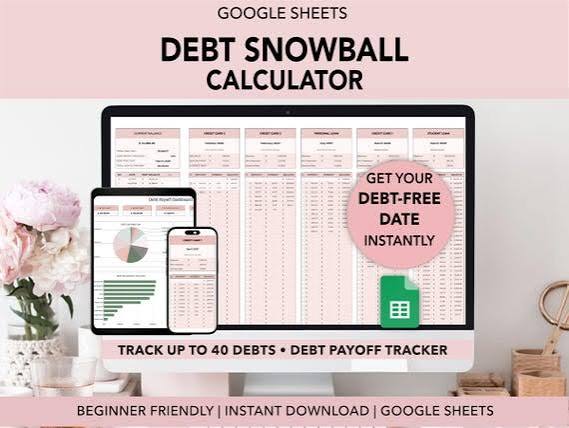
Debt payoff strategy calculators are most useful once you already know the real question: Should I attack my debt by interest rate, by balance, or by the smallest required payment I can manage? These tools are built to answer that. And I’ll show you how to use debt payoff strategy calculators without letting the calculator choose for you.
I write about personal finance as public information, not personal financial advice. Your situation can change the right answer fast; interest rates, minimum payments, tax rules, and creditor policies can all shift the picture, so a qualified adviser should review your own numbers before you commit.
Want a payoff plan that sticks? Then the calculator is not the destination. It is the filter. It shows which payoff order saves more interest, which one gives you faster wins, and which one fits your cash flow and temperament.
- Debt payoff strategy calculators compare payoff order, total interest, and payoff time.
- Debt avalanche is the lower-interest method when you can keep making steady extra payments.
- Debt snowball can help when early wins matter more than the last dollar of interest.
- Enter real minimum payments and real extra cash, not optimistic numbers.
- Run at least two scenarios: one with your baseline extra payment and one with a cautious amount.
- For consumer debt guidance, see the Consumer Financial Protection Bureau and the Federal Trade Commission.
The Real Difference Between Debt Snowball and Debt Avalanche
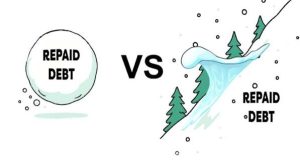
The debt avalanche wins on math. The debt snowball wins on follow-through. Clean and blunt. This is why debt payoff calculators exist in the first place.
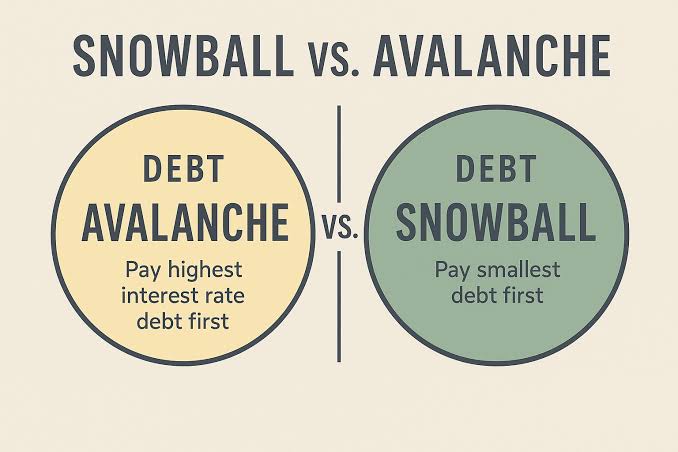
A calculator that compares snowball and avalanche is not there to entertain you; it is there to answer a practical question: Do I need the plan that minimizes interest costs, or the plan that is easiest to keep alive long enough to work? Avalanche orders debts from highest interest rate to lowest. Snowball sorts them from smallest balance to largest. Both usually tell you to keep making every minimum payment and throw extra money at one target debt until it disappears.
The difference is psychological and financial. Avalanche is the more efficient structure when the goal is to reduce interest as much as possible, but it can feel slow if your smallest debt is tiny and your largest debt barely moves. Snowball gives you quicker first wins, and that matters more than people admit. A calculator can show you that snowball may cost more in interest over time, but it cannot tell you whether you will quit a plan that feels too flat.
For someone disciplined and focused on total cost, avalanche usually deserves the first look. For someone who needs visible progress to stay engaged, snowball can be the better system even if it is not the mathematically leanest one. The right calculator choice depends on which problem you actually have: cost control or consistency.
People comparing debt payoff strategy calculators often miss the point that the best strategy on paper can still fail if your minimum payments are tight, your income is irregular, or one missed month would break the whole setup. A calculator only works when its assumptions match your real life. Otherwise, it is just a very tidy guess.
The Honest Side-by-Side
| Criteria | Debt Snowball | Debt Avalanche | Winner for this condition |
|---|---|---|---|
| Primary ordering rule | Smallest balance first | Highest interest rate first | Avalanche if total interest matters most |
| Speed of first visible win | Usually faster | Often slower at the start | Snowball if motivation is fragile |
| Total interest paid | Usually higher | Usually lower | Avalanche if you can stick with it |
| Best fit for uneven motivation | Stronger | Weaker | Snowball if you need momentum |
| Best fit for data-driven users | Good, but not ideal | Stronger | Avalanche if you trust the math |
| Complexity of deciding the next debt | Simple to explain | Simple to explain | Tie |
| Risk of discouragement | Lower for many people | Higher if large balances linger | Snowball if you struggle with delay |
| Works better with extra lump sums | Yes, but less efficiently | Yes, usually more efficiently | Avalanche for cost control |
| Most useful calculator output | Time to first payoff | Interest saved over time | Depends on your goal |
I would start with avalanche results, then check snowball as a reality check. If the avalanche savings are modest but the snowball gives you a plan you are much more likely to follow, that trade-off deserves serious weight. A plan you abandon costs more than any projected savings. Simple as that.
Debt Snowball: Who Should Actually Use This (and Who Shouldn’t)
Snowball works for people who need quick psychological proof that the plan is real. I would choose it for someone who has tried to pay off debt before and stalled because the numbers felt too slow. This is its real strength: it creates visible progress early.
A debt payoff calculator built around snowball is useful when your debt list is long and your budget is tight. You can see the smallest balance disappear first, which frees up a payment and gives you a clean next step. That can be a real morale boost. When your finances feel scattered, snowball also cuts down decision fatigue. You know exactly which debt gets the extra money next.
Its weakness is just as real. Snowball can cost more in interest than other payoff orders because it ignores rate and focuses on balance size. That matters when one of your larger debts carries a much higher rate than the others. In that case, the snowball may keep a costly balance around longer than necessary. The consequence is not abstract; it is extra time paying interest while a different debt could have been shrinking faster.
I would not point a highly analytical borrower toward snowball if they are fully capable of sticking with a cost-minimizing plan. It is also not always the best fit for someone whose main issue is expensive revolving debt and who has enough discipline to tolerate slower early progress. If you are already motivated by the long game, snowball can look satisfying while quietly giving away efficiency. Funny how that works.
Snowball makes the most sense for:
– People who need a morale boost
– Borrowers who have quit payoff plans before
– Households with many small balances
– Anyone who values simplicity over optimization
Snowball is a weaker fit for:
– People with one very high-rate debt
– Borrowers who are comfortable with delayed gratification
– Anyone trying to minimize total interest as much as possible
When using a calculator for snowball, I would pay close attention to the timeline, not just the order. The early wins matter because they keep the plan alive. If the calculator shows a modest difference in interest but a big difference in how quickly you see progress, that is the part that can make snowball worth considering.
Debt Avalanche: The Specific Situations Where It Wins
Debt avalanche wins when the borrower can stay disciplined long enough to let the math do its work. This is the key condition. If you can keep sending extra money to the highest-rate debt month after month, avalanche is usually the most efficient structure available to a consumer debt payoff plan.
A payoff calculator can be especially useful here because the savings are not always obvious by inspection. Two balances can look similar, yet the rate difference can make one debt much more expensive over time. A calculator exposes that gap. It also helps you see whether the highest-rate debt is large enough to justify staying the course even when another balance looks emotionally more satisfying to erase.
The real strength of avalanche is not just lower interest. It is focus. You stop chasing the loudest bill and start attacking the most expensive one. That can be a relief if your debt list has spread across cards, store accounts, and installment loans. One rule. Highest rate first. Then keep going.
The drawback is the one people feel first: the early months can look boring. You may pay off a smaller, cheaper debt faster under snowball, and avalanche can leave you staring at the same ugly balance for longer. That does not mean it is wrong. It means the emotional reward arrives later. If you need immediate wins, that delay can become expensive in a different way because it raises the risk that you quit.
Avalanche is a better fit for:
– People who can keep a steady plan without visible early rewards
– Borrowers with a clearly higher-rate debt
– Anyone comparing payoff plans with a calculator and caring mostly about cost
– Households that want the cleanest financial order of attack
Avalanche is not the best choice for:
– People who are motivated by quick progress alone
– Borrowers who have already abandoned long payoff plans
– Anyone who is likely to feel stuck by a large balance
When I think about a calculator here, I think “discipline tool.” It is not there to cheer you up. It shows how paying down the highest-rate balance first can change the shape of the entire payoff timeline. That is the point.
The Honest Side-by-Side
If you only look at one section, look at this one. The calculator’s job is to turn vague debt stress into a concrete plan, and the comparison below shows the decision points that actually matter. I am leaving out superficial differences that do not change the outcome.
The Honest Side-by-Side
| Criteria | Debt Snowball | Debt Avalanche | Winner for this condition |
|---|---|---|---|
| Order of extra payments | Smallest balance first | Highest interest rate first | Avalanche for cost efficiency |
| Early motivational payoff | Usually stronger | Usually weaker | Snowball if you need momentum |
| Interest cost over time | Usually higher | Usually lower | Avalanche if you can stay with it |
| Ease of understanding | Very easy | Very easy | Tie |
| Risk of quitting | Lower for many users | Higher for some users | Snowball if motivation is fragile |
| Best use of a payoff calculator | Seeing progress milestones | Comparing interest savings | Depends on your goal |
| Best fit for variable income | Can work well, but still needs a buffer | Can work well, but still needs a buffer | Tie if minimums are covered |
| Best fit for emotionally draining debt lists | Stronger | Weaker | Snowball if you need visible wins |
| Best fit for rate-driven debt problems | Weaker | Stronger | Avalanche if rate spread is large |
A generic article would stop there and pretend the answer is obvious. It is not. What changes the decision is not the label on the method. It is the shape of your debt list and the strength of your follow-through.
If your rates are all clustered closely together, the practical difference between snowball and avalanche may be smaller than people assume. In that case, the emotional fit can matter more than the mathematical edge. When one rate is much higher, avalanche deserves more respect.
Also, a calculator only matters if you enter honest numbers. The minimum payment you can really make, not the one you hope you can make. The extra amount you can keep sending monthly after rent, food, transport, and true emergencies. If the calculator is built on fantasy cash flow, the output is just polished fiction.
For a reliable outside reference, I would point readers to the Consumer Financial Protection Bureau’s debt collection and repayment guidance, and to the Federal Trade Commission’s consumer pages on debt and credit. Those organizations do not sell a payoff method, which is exactly why their guidance is useful.
- Consumer Financial Protection Bureau: https://www.consumerfinance.gov/
- Federal Trade Commission consumer debt guidance: https://consumer.ftc.gov/
Our Verdict: Which One to Choose and Why
Choose debt avalanche if you can make steady extra payments without needing early emotional wins, and if your highest-rate debt is clearly more expensive than the rest. Choose debt snowball if you have struggled to stay with a payoff plan before and you need small, fast victories to keep going. Neither if you cannot reliably cover minimum payments or you are treating the calculator like a substitute for a real budget; in that case, consult a qualified credit counselor or financial adviser and use the Consumer Financial Protection Bureau’s budgeting and debt guidance as a starting point.
That is the call I would make. Avalanche is the better financial choice when discipline is solid. Snowball is the better behavioral choice when discipline is the weak point. The calculator should not blur that difference; it should make it visible.
A lot of people want a third answer: “Tell me which one is best for everyone.” There is no honest version of that. I can say which one is more efficient on paper. I can also say that the better plan is the one you will not abandon in month four. Those are not contradictory. They are the two sides of a real decision.
When comparing calculators, do this in order:
1. Enter your real balances, rates, and minimums.
2. Run avalanche first to see the cost-minimizing path.
3. Run snowball second to see the motivation-friendly path.
4. Choose the plan that fits your actual behavior, not your ideal self.
That last step matters most. People pay off debt with habits, not with spreadsheet aspirations.
When to Reconsider This Choice Entirely
Sometimes the right answer is neither snowball nor avalanche. That is the part generic guides skip, and it is where people save themselves from wasting months on the wrong setup.
The overall verdict flips in these cases:
-
Your income is unstable.
When your pay changes a lot month to month, the first priority is a buffer for minimum payments and essential expenses. A payoff calculator still helps, but only after you make the plan resilient enough to survive a bad month. -
You are behind on essentials, not just debt.
When rent, utilities, groceries, or insurance are slipping, payoff order is not the main issue. The budget needs triage. A calculator that optimizes debt while essentials are shaky is solving the wrong problem. -
One debt has a dramatically higher cost than the others.
When the gap is large, avalanche becomes much more attractive. The emotional appeal of snowball may not justify the extra cost of leaving an expensive balance hanging around. -
Your debt is part of a broader restructuring problem.
When the balances are already unmanageable, a payoff calculator may be too small a tool for the problem. In that situation, speaking with a qualified credit counselor, financial adviser, or other appropriate professional is more sensible than pretending a payoff order can fix everything.
This is also where I would be cautious about any calculator that promises a single “best” answer without asking about your budget cushion, your income stability, or whether new debt is still being added. A calculator should help you choose a path, not hide the fact that the path may be unrealistic.
How to Use a Debt Payoff Calculator Without Fooling Yourself
A calculator is only as useful as the assumptions you feed it. Enter hopeful numbers, and you get hopeful fiction back.
Start with your real debt list:
– balance
– interest rate or APR, if you have it
– minimum monthly payment
– whether the debt is fixed-term or revolving
Then decide what counts as extra money. Not “what would be nice to pay,” but what you can keep paying after necessities and a reasonable emergency cushion. When your budget changes month to month, use a conservative figure. The goal is not to impress yourself. It is to build a plan that survives ordinary life.
Watch for these calculator traps:
– ignoring minimum payments
– forgetting promotional rates may change
– assuming extra cash will always be available
– mixing debt payoff with new borrowing
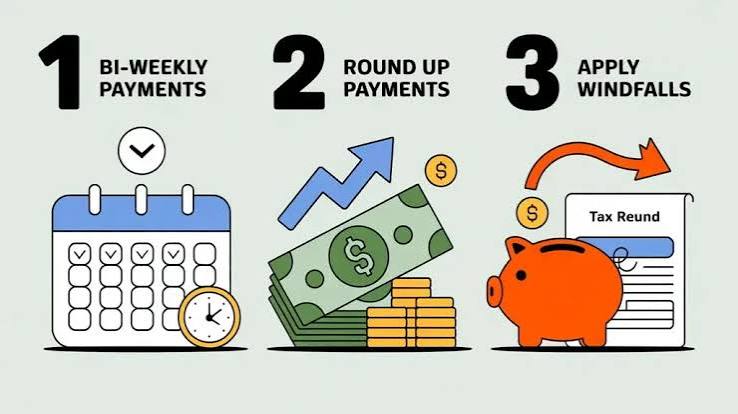
– treating tax-refund-style windfalls as guaranteed
A good calculator makes it easy to compare the plan under different assumptions. I would run at least two scenarios: one with your baseline extra payment and one with a more cautious number. If the plan only works in the optimistic scenario, it is not really a plan.
Also, do not let the calculator distract you from behavior. If you keep adding new balances while trying to pay old ones down, the result will look better than your real life for a while and then collapse. Payoff calculators are not magic. They are mirrors.
What Most Generic Guides Leave Out
Most articles describe snowball and avalanche as if the choice were purely mathematical. That misses the real friction.
The first omission is motivation decay. Many people can start a debt plan. Fewer can keep it going after the first few months. That is why the calculator’s projected savings are not the only number that matters. The probability that you will still be following the plan six months from now matters just as much.
The second omission is uneven debt quality. Not all balances are equally painful. A high-rate revolving balance is not the same as a low-rate installment loan, even if the balances are similar. A calculator should help you see that difference clearly.
The third omission is new debt behavior. If