Last updated: October 20, 2026
Quick Answer: For a mixed debt portfolio, debt avalanche usually saves the most interest, while debt snowball can be better if 1 or more small balances are causing the reader to lose momentum. I am treating this as financial information, not personal financial advice, and a qualified financial adviser or credit counselor should be consulted for the reader’s own situation. The CFPB’s debt collection and debt management guidance is a useful starting point. CFPB
Debt Avalanche vs Debt Snowball for Mixed Debt Portfolios means the balances are not neat or uniform: a few small store cards, one or two credit cards with higher APRs, maybe a student loan, and a personal loan or balance transfer card in the mix. That changes the decision. The right method is not the one with the cleanest slogan; it is the one that matches the way the portfolio behaves month to month.
Key takeaways
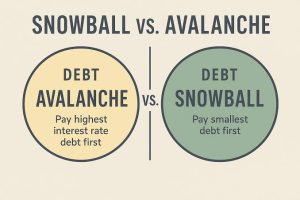
- Debt avalanche is the mathematical choice because it targets the highest interest rate first, which usually reduces total interest over time.
- Debt snowball is the behavioral choice because it clears small balances early, which can create momentum when multiple accounts feel unmanageable.
- Mixed portfolios make the decision less binary: one $300 store card and one large credit card balance can pull the reader toward snowball, while a stack of higher-rate cards points back to avalanche.
- Balance transfer cards and student loans can distort the order, so APR alone is not always the whole story.
- A method only works if the monthly payment stays consistent for enough months to matter.
The real difference when the debts are mixed

Debt avalanche wins on dollars saved; debt snowball wins on follow-through. That is the core split, and mixed balances make it sharper because the smallest account is often not the most expensive one.
Under avalanche, extra money goes to the highest APR debt first while minimums keep the other accounts current. Under snowball, extra money goes to the smallest balance first, even if a larger balance has a worse rate. In a portfolio with a $250 store card, a $4,000 credit card, and a $9,500 personal loan, avalanche may send money to the credit card first if its APR is the highest, while snowball will usually eliminate the $250 account first because it is emotionally easier to cross off the list.
That matters because mixed portfolios are messy in a way clean comparisons ignore. Store cards often carry high APRs. Credit cards can be high-rate and revolving. Student loans may have different repayment rules and may not behave like revolving debt. Personal loans usually have fixed amortization. Balance transfer cards can have a promotional rate that changes later, so the “highest APR” can shift over time.
For a reader with mixed debts, the key question is not “Which method is superior?” It is “Which method will keep the monthly payment focused long enough to make a dent?” That is the real test. A method that looks perfect on paper but collapses after two months is a weak plan. The Consumer Financial Protection Bureau and the Federal Trade Commission both publish plain-language guidance on managing debt and comparing repayment options; those are useful starting points for the mechanics, though they do not replace personal advice from a qualified professional. FTC debt advice CFPB managing debt
Debt avalanche is the better fit for mixed portfolios with high APRs
Debt avalanche wins for readers who can stick to a spreadsheet and want the most interest-efficient order. If the portfolio has several credit cards or store cards with very different APRs, the avalanche method usually gives the cleanest mathematical path.
The strength is obvious: every extra dollar attacks the balance that costs the most to carry. That is especially useful when one account has a much higher APR than the others or when a balance transfer card’s promotional period is ending soon. In those cases, paying according to interest rate, not balance size, is the more disciplined move because it avoids letting expensive debt linger.
Avalanche also works well when the debt load includes a large personal loan with a lower rate than the cards. A reader who has a $2,000 card at a high rate and a $12,000 installment loan at a lower rate should usually not let the larger loan dictate the order just because it looks intimidating. The cost of delay matters more than the size of the line item.
The weakness is behavioral, and it is real. Mixed portfolios often contain one or two tiny balances that feel “almost done.” Avalanche can leave those sitting there for months while the reader pours money into a larger, uglier account. If the smallest debts do not move, motivation can sag. That is not a moral flaw; it is how attention works. For some people, the sight of five unpaid accounts is enough to make the system fail, even if the numbers say it is optimal.
Avalanche is not for a reader who routinely abandons plans after a few pay cycles. It is for the person who can tolerate slower visible wins in exchange for a cleaner financial result. If the reader has multiple credit cards, a store card, and perhaps a personal loan, and can keep the same extra payment moving for 6 to 12 months without quitting, avalanche is usually the stronger fit.
Debt snowball is the better fit when small balances are breaking momentum

Debt snowball wins when the portfolio has several small balances that are mentally loud. If there are three or four accounts under a few thousand dollars and the reader keeps feeling stuck, snowball is often the more practical choice.
The advantage is simple: small balances disappear first. That creates a visible reduction in the number of bills, which can make the plan feel manageable. A reader with a $400 store card, a $900 credit card, and a larger student loan may find more traction by wiping out the two smaller accounts first, even if they are not the most expensive. The payoff sequence becomes easier to understand and easier to continue.
That early progress has a concrete effect. One fewer monthly minimum means one less account to track, one less due date to miss, and one less reminder that the debt is still there. For someone who is juggling mixed debts and a tight budget, those small wins can matter more than a cleaner theoretical order. Snowball is also easier to explain to a partner or family member, which helps if money management is shared.
The drawback is cost. If the smallest balance happens to be the lowest-rate debt, snowball can leave a high-APR credit card or store card untouched longer than avalanche would. That can mean more interest over time. The reader should be honest about that trade-off. Snowball does not change the math; it changes the behavior.
Snowball is not the right fit for a reader who is highly disciplined and mainly wants to minimize interest. It is for the reader whose problem is inconsistency, not arithmetic. If the portfolio contains many small debts and the emotional payoff of closing accounts matters more than maximizing efficiency, snowball can be the better tool.
The honest side-by-side
Avalanche is the more efficient order; snowball is the more motivating order. For mixed debt portfolios, that difference shows up in exactly the accounts that cause stress: credit cards, store cards, student loans, personal loans, and balance transfer cards.
| Criteria | Debt avalanche | Debt snowball | Winner for this condition |
|---|---|---|---|
| Interest cost over time | Targets the highest APR first | May delay expensive balances | Avalanche if the goal is lower total interest |
| Early visible progress | Can feel slow when small balances remain | Clears small balances quickly | Snowball if motivation is fragile |
| Best use of extra monthly cash | Goes where carrying cost is highest | Goes where balance size is smallest | Avalanche for rate-heavy portfolios |
| Handling small balances | May leave them open longer | Knocks them out early | Snowball when many tiny accounts distract |
| Handling mixed APRs | Directly accounts for APR differences | Ignores APR unless balances align by chance | Avalanche when APR spread is wide |
| Best for behavioral follow-through | Requires patience and consistency | Gives frequent wins | Snowball if the reader needs momentum |
| Works well with balance transfer cards | Useful if promo period is ending | Can miss rate urgency | Avalanche if timing matters |
| Works well with student loans | Keeps lower-rate loans from jumping ahead | Can over-prioritize small loans | Avalanche if loans have lower APRs |
| Simplicity of explanation | Slightly more number-driven | Easier to explain emotionally | Snowball for shared household planning |
The table hides one important point: neither method changes minimum payments. That matters because a mixed portfolio with five accounts can still fail if the reader cannot cover the required minimums. The method only organizes the extra dollars. If the budget is so tight that even the minimums are shaky, a repayment strategy alone is not the answer.
The better clue is the shape of the portfolio. If the balances are small but the APRs are not extreme, snowball can be enough to get moving. If the APRs are high and uneven, avalanche is usually the cleaner decision. That split is why generic “debt payoff strategy” articles mislead readers with mixed debts: they talk as if every balance behaves the same. It does not.
What changes the decision in real life
The decision flips when the reader has one of three problems: motivation, timing, or account structure. Those are the scenarios where a clean avalanche-versus-snowball answer stops being clean.
First, if a balance transfer card has a promotional rate that is about to expire, the APR can jump from temporary to expensive. In that case, the account’s future cost matters more than its current balance size. A reader who ignores the promo window because the card is small may create a larger problem later.
Second, if the portfolio includes a student loan with special repayment terms, the order may not be as simple as highest APR versus smallest balance. Some student loans do not act like revolving credit cards, and federal loan rules can differ from private loan rules depending on the country and program. That is a good reason to confirm the exact repayment terms before choosing an order.
Third, if there are multiple tiny store cards or retail cards, snowball may be the method that keeps the plan emotionally alive. When there are six accounts and four of them are small, the reader may need the psychological win of closing one after another.
Fourth, if the reader already has strong discipline and a stable budget, avalanche tends to dominate. That is especially true when the portfolio includes several high-APR credit cards. If the plan can run for 12 months without interruption, the math usually deserves the final say.
This is also the point where outside guidance helps. The CFPB explains debt management basics, and the FTC has consumer advice on dealing with debt collectors and repayment decisions. For an actual household budget, a licensed financial counselor or adviser can help sort out how the debts are legally structured, which matters more than the slogan on the method. CFPB debt management basics FTC dealing with debt
The verdict for mixed debt portfolios
Choose debt avalanche if the portfolio has uneven APRs, especially with credit cards and store cards, and the reader can keep the plan going for months without losing focus. Choose debt snowball if several small balances are causing the reader to stall, skip, or quit before the first large account moves. Neither if the budget cannot reliably cover minimum payments or if the accounts have special terms that need professional review first.
That is the plain answer for mixed debt portfolios. Avalanche is usually the better financial system. Snowball is often the better human system. The right choice is the one the reader can actually keep paying for long enough to matter.
When to reconsider the choice entirely
Sometimes the real answer is not to choose between the two methods at all. That is true when the debt mix includes a balance transfer card with a deadline, a disputed charge, or an account in collections. It is also true when minimum payments are already late, because no ordering system can fix a cash-flow shortfall by itself.
Another reason to pause is when the reader is tempted to keep shifting money without tracking the new total debt. A repayment method only works if the extra payment remains extra. If the budget keeps leaking into new charges, even a perfect order fails.
If the portfolio includes both revolving debt and installment debt, the reader should separate the question of order from the question of structure. The order decides where extra money goes. The structure decides which debts can be renegotiated, consolidated, or reviewed by a qualified professional. Those are different problems.
When is snowball better than avalanche?
Snowball is better when momentum matters more than interest efficiency. If the reader has several small balances, feels overwhelmed by too many accounts, or needs early wins to stay engaged, snowball can be the more workable choice. A $300 or $800 balance closed fast can change behavior in a way a spreadsheet cannot.
Can I combine snowball and avalanche?
Yes, and mixed debt portfolios sometimes make that practical. The reader can use avalanche for high-APR accounts while still clearing one very small balance first if that prevents quitting. The trade-off is that the method becomes less pure, so the reader should be clear about the reason for the exception and keep the monthly payment focused.
Which method works best with many small debts?
Snowball usually works best with many small debts. The reason is not that it saves the most money; it is that it reduces the number of open accounts faster, which can make the payoff plan feel alive. If the portfolio has five or more tiny balances, that psychological payoff often matters more than the theoretical advantage of avalanche.
Drafted with AI; not yet reviewed by a person.