Last updated: August 11, 2026
- This is a planning tool for what is debt payoff calculator how does it work?
- The Honest Side-by-Side The comparison below shows what actually changes the decision.
- A consolidation calculator looks at what happens if debts are combined into one new payment.
- But it cannot tell you whether a plan fits your full budget or your broader goals.
Quick Answer: A debt payoff calculator estimates how many months it may take to pay off debt, how much interest you may pay, and how a higher monthly payment can change the timeline. This is a planning tool for what is debt payoff calculator how does it work?, not a final decision-maker.
A debt payoff calculator shows how long it may take to clear a balance, how much interest you may pay, and how a single payment change can reshape the schedule. For readers who need a clear plan, not a pep talk, I write about personal finance and mean this plainly: a debt payoff calculator is a planning tool, not a financial answer machine. Useful? Absolutely. But it cannot tell you whether a plan fits your full budget or your broader goals.
Key Facts
– A debt payoff calculator can estimate payoff time in months and total interest from the balances, rates, and payments you enter.
– Snowball and avalanche are repayment methods; the calculator is the tool that compares them.
– Extra payments, rate changes, and missing fees can change the result.
– If your situation includes missed payments, collections, or unstable income, consider a qualified financial adviser or credit counselor.
– For consumer guidance, see the CFPB and NFCC resources linked below.
This is information, not financial advice. For your own situation, I would strongly suggest speaking with a qualified financial adviser or credit counselor, especially if you are juggling multiple debts, missed payments, or irregular income.
What a Debt Payoff Calculator Actually Does
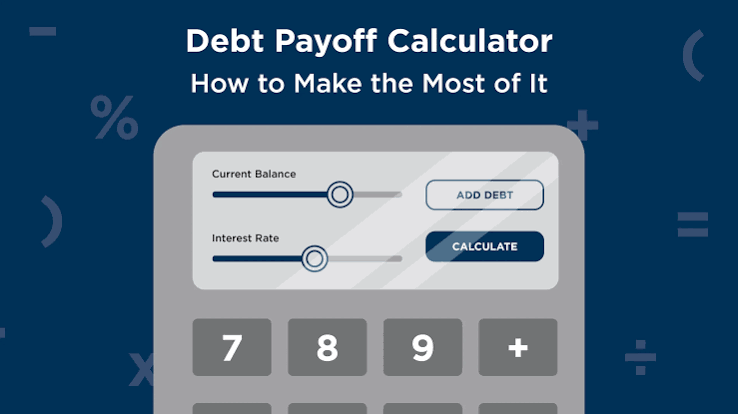
A debt payoff calculator works best when you want the math before you commit. It takes the balances, interest rates, and payment amounts you enter, then estimates how debt will shrink over time. Not just the end date. The path matters too: which balance gets attacked first, how interest piles up, and what happens if you pay more than the minimum.
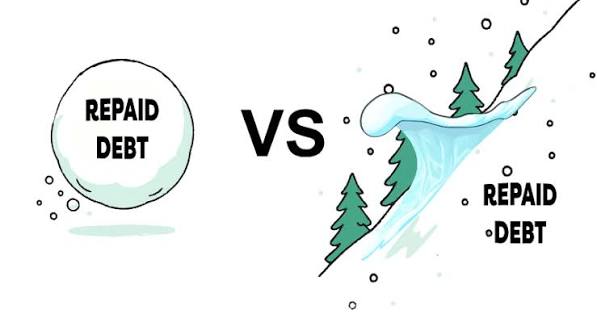
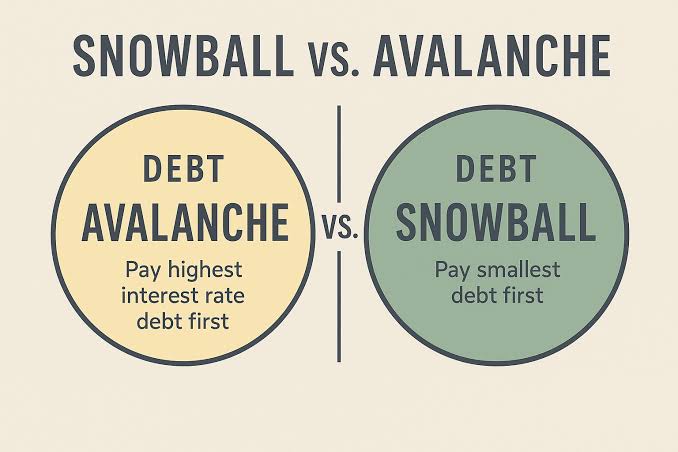
Most calculators handle one of two common methods. The first is the debt snowball, where you target the smallest balance first while keeping minimum payments on everything else. The second is the debt avalanche, where you attack the highest interest rate first. Some calculators let you compare both. That comparison matters because the methods can produce different emotional and financial outcomes.
Garbage in, garbage out. If you leave out a fee, use the wrong interest rate, or forget a promotional rate ending soon, the estimate will be off. That does not make the calculator useless. It means the calculator is a model, and models only work when the inputs are close to reality.
Here is the basic logic most calculators use:
- Start with each debt’s balance, rate, and minimum payment.
- Apply your monthly payment.
- Calculate interest for the period.
- Reduce the balance.
- Repeat until the balance reaches zero.
The strongest calculators also let you add extra monthly payments, one-time lump sums, or a change in income. That makes them more useful than a simple amortization chart. When a calculator cannot show the effect of an extra payment, I would treat it as a rough estimate and consult a qualified financial adviser or credit counselor before relying on it as a planning tool. For consumer education on debt and repayment, the Consumer Financial Protection Bureau is a helpful source: https://www.consumerfinance.gov/consumer-tools/debt-collection/.
For a plain-language explanation of debt and repayment options, the Consumer Financial Protection Bureau has helpful material on debt collection and debt management: https://www.consumerfinance.gov/consumer-tools/debt-collection/. For a broader money-planning framework, the National Foundation for Credit Counseling is also a credible starting point: https://www.nfcc.org/.
Debt Payoff Calculator: Who Should Actually Use This, and Who Shouldn’t

A debt payoff calculator is best for someone who already knows the debts they want to tackle and needs a clear order of attack. With credit cards, a personal loan, or student loans carrying different rates and minimums, it helps you see which payoff path is faster, which one costs less in interest, and how much breathing room an extra payment creates.
It also works well for people who are disciplined enough to stick with a plan once they see it. The calculator turns a vague goal like “I want out of debt” into a timeline. That can be motivating. Honestly, I would especially recommend it to someone who is trying to decide between snowball and avalanche and wants the difference spelled out in numbers.
The weakness is just as real: the calculator can make the plan look cleaner than your life. When your income changes from month to month, when you are carrying past-due accounts, or when you are constantly covering emergencies with credit, a calculator may give you a tidy answer that ignores the real problem. In that case, the issue is not payoff order. The issue is cash flow.
Skip a calculator as your only guide if you are already behind on essential bills, facing collections, or unsure whether you can make minimum payments next month. The calculation may still be useful, but it should sit beside a budget review, not replace one. Same goes for special terms — a promotional rate that ends soon, a deferred interest clause, or legal consequences for late payment can change the best move fast.
A good rule: use a debt payoff calculator when you are comparing repayment strategies. Do not use it as a substitute for a realistic monthly budget or a conversation with a qualified adviser.
Debt Payoff Calculator vs. Debt Snowball vs. Debt Avalanche
The calculator is not the strategy. It is the tool that helps you compare strategies. That distinction matters, because readers often mix them up. A debt snowball or debt avalanche is a payoff method. A debt payoff calculator is the thing that shows how those methods play out with your actual numbers.
Snowball usually wins for motivation. Paying off a small balance first can create a quick win, and that matters if you have struggled to stay engaged. The downside is that it may cost more in interest than another method, depending on your balances and rates. I would not call that a flaw if the quick win keeps you on track, but I would call it a trade-off you should see before choosing.
The avalanche method usually wins on math. It focuses extra payments on the highest interest rate first, which often reduces the total interest cost compared with other orders. The downside is emotional: the first visible win may take longer, and that can test patience.
A debt payoff calculator sits in the middle. It can show both methods side by side and help you decide which cost and which psychology matter more for your situation. If a calculator does not let you compare both, it is less useful than it should be.
The Honest Side-by-Side
The comparison below shows what actually changes the decision. I am not treating the calculator and the repayment methods as competitors. I am treating them as different tools in the same decision, and if your debt situation is unusually complex, a qualified financial adviser or credit counselor can help you choose a path.
| Criteria | Debt Payoff Calculator | Debt Snowball / Avalanche Method | Winner for this condition |
|---|---|---|---|
| Main purpose | Estimates payoff timeline and interest | Gives a repayment order | Calculator, if you need to compare options |
| Best user | Someone planning a strategy | Someone ready to follow a strategy | Depends on the decision stage |
| Emotional clarity | Medium; shows numbers, not habit change | High; simple rule to follow | Method, if you need simplicity |
| Math precision | Depends on the inputs | Depends on the strategy chosen | Calculator, if inputs are accurate |
| Motivation | Good if you like progress charts | Snowball can feel more motivating | Method, for motivation |
| Flexibility | High; you can change payments and debts | Lower; you follow a preset order | Calculator, for changing budgets |
| Risk of confusion | Higher if you enter bad data | Lower if you understand the rule | Method, for straightforward execution |
| Interest-cost awareness | Built to show it | Avalanche is built to reduce it | Calculator, when comparing cost |
| Useful for irregular income | Sometimes, if the tool allows scenarios | Less so, unless you adapt manually | Calculator, for variable cash flow |
| Best for deciding “which plan fits me?” | Yes | Not by itself | Calculator |
How It Works Step by Step
A debt payoff calculator simulates month-by-month repayment. The basic idea is simple, but the details matter.
Start with each debt’s current balance. Then add the interest rate and the minimum payment. Some calculators ask for the due date, the payment frequency, or whether interest compounds monthly or daily. Those settings matter because card debt and loans can behave differently.
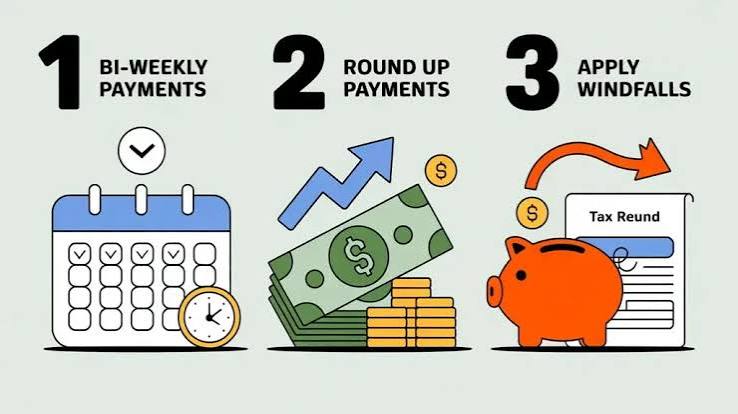
Next, add any extra money you can put toward debt each month. That is the number that changes the result fastest. Even a modest extra payment can shorten the timeline, but I am not going to guess at a percentage or a dollar effect because that depends entirely on your balances and rates.
Then the calculator runs the sequence. It calculates interest for the period, subtracts your payment, and applies any extra amount to the debt you targeted first. If you choose snowball, that target is usually the smallest balance. If you choose avalanche, it is usually the highest interest rate.
Finally, it shows the result as a payoff date, total interest estimate, or month-by-month schedule. A better calculator will let you run multiple scenarios. That is the real value. You are not looking for one magical answer. You are comparing the cost of different choices.
The biggest limitation is that the model assumes you can keep making the payments you entered. If an emergency, income drop, or new expense breaks that assumption, the projection becomes less reliable. Forecast, not guarantee. That is the trade-off.
Our Verdict: Which One to Choose and Why
Choose a debt payoff calculator if you are trying to decide between repayment strategies and want to see the effect of your actual numbers before you act. Choose a snowball or avalanche method if you already know your budget and need a simple rule that keeps you moving. Neither if you are behind on essentials, missing minimum payments, or not sure your budget can support a repayment plan at all.
That is my direct call. The calculator is the right first step for comparison. The method is the right next step for execution.
I would choose the calculator first for most readers because it answers the question behind the question: “What happens if I pay this way instead of that way?” That is the decision people usually need, even if they do not say it out loud. The drawback is that the calculator can tempt you into endless scenario shopping. At some point, you have to pick a path and stick to it.
I would choose a repayment method first only if you are the kind of person who will overanalyze every option and never start. In that case, a simple rule may be more useful than more data.
When to Reconsider This Choice Entirely
There are a few cases where the whole calculator-first approach flips.
When your income is unstable, a payoff calculator can mislead you unless you use conservative numbers. A plan built on your best month is not a plan. It is a hope.
Facing collections, garnishment, or a legal deadline tied to debt? The payoff order may matter less than getting proper advice quickly. That is when I would stop treating the calculator as the main tool and speak with a qualified adviser or credit counselor.
Special terms deserve extra care. If your debt includes a promotional rate that ends soon or a deferred interest clause, you should not rely on a generic calculator alone. Those features can change the repayment math in ways a simple tool may not capture.
If your real problem is spending behavior rather than debt structure, a calculator can only do so much. It can show the path out, but it cannot stop new balances from showing up. In that case, a budget review matters as much as the payoff plan.
Common Mistakes People Make with Debt Payoff Calculators
The most common mistake is treating the output as a promise. It is not. It is a forecast based on the numbers you entered.
Another mistake is using the minimum payment as the goal instead of the baseline. Minimum payments keep an account current; they usually do not move debt out of your life quickly.
People also forget to include every debt. A small forgotten balance can distort the plan, especially if its rate is high.
The last mistake is comparing only the payoff date and ignoring total interest. Sometimes the faster-feeling plan is not the cheaper one, and sometimes the cheaper one feels too slow to hold your attention. That is the real trade-off.
FAQ
Is a debt payoff calculator the same as a debt consolidation calculator?
No. A debt payoff calculator estimates how long repayment takes under a chosen plan. A consolidation calculator looks at what happens if debts are combined into one new payment. Those are different questions, and consolidation also deserves careful review with a qualified adviser.
Do I need exact numbers for a debt payoff calculator to work?
Exact is better, but the tool still helps if your numbers are close. The more accurate your balances, rates, and minimum payments are, the more useful the result will be.
Which payoff method does a calculator usually favor?
A calculator does not favor one method by default. It can compare snowball and avalanche, or it can model a custom order. The result depends on the debts you enter and how you direct extra payments.
Can a debt payoff calculator help with credit cards and loans together?
Yes. That is one of its main strengths. It can show how different debts interact in a single payoff plan, which is harder to see when you look at each account in isolation.
Is a debt payoff calculator enough to make a debt decision?
Usually not by itself. It is a strong planning tool, but if you have missed payments, a shaky budget, or legal concerns, I would use it alongside professional guidance.